
Reviewed · ATACAMA DESERT TOURS
Astronomical Tour in San Pedro de Atacama
The desert sky is the real show. This three-hour evening at Observatorio Etno-Astronómico Licanantay combines Indigenous Atacama star lore with telescope viewing, laser-guided constellation talks, real-time astrophotography, and a drink beneath the Milky Way. At about $49 per person, it offers more than a quick look through a telescope.
I especially like the chance to learn about dark constellations and the way ancestral cultures read the sky. I also like the small group limit of 15, plus the warm drinks, blankets, snacks, and cocktail at the end. The main drawback is uneven organization: pickup can be confusing, bilingual explanations may favor Spanish speakers, and one serious report describes a confirmed booking that was later unavailable.
In This Review
- Key points before you book
- Why San Pedro is such a fine place to study the sky
- Arriving at Observatorio Etno-Astronómico Licanantay
- The first lesson: stars through Licanantay eyes
- What you may see through the telescopes
- Milky Way photographs and practical expectations
- Staying warm in the Atacama night
- Is $49 a fair price?
- Weather, moonlight, and cancellations
- Who will enjoy this evening most?
- Final verdict: should you book it?
- FAQ
- Where does the astronomical tour take place?
- How long does the tour last?
- What time does the experience begin?
- How many people can join the tour?
- Is transportation included?
- Is the tour offered in English?
- What can I see through the telescopes?
- Are photographs included?
- Are food and drinks provided?
- Can I cancel for a refund?
Key points before you book
- Indigenous astronomy comes first: The guide explains dark constellations and their place in local culture, not only the familiar Greek star patterns.
- Telescopes show planets and stars: Depending on the night, you may view Saturn, Jupiter, the moon, and other deep-sky objects.
- Astrophotography is part of the evening: The team takes individual and group pictures, often with the Milky Way behind you.
- A small group helps: The maximum is 15 people, making it easier to ask questions and get telescope time.
- Warmth and refreshments matter: Expect hot tea or coffee, lap blankets, snacks, wine or pisco sour, and sometimes a bonfire.
- Weather and coordination can affect the night: Clouds may cancel the tour, while pickup timing has been inconsistent.
Why San Pedro is such a fine place to study the sky
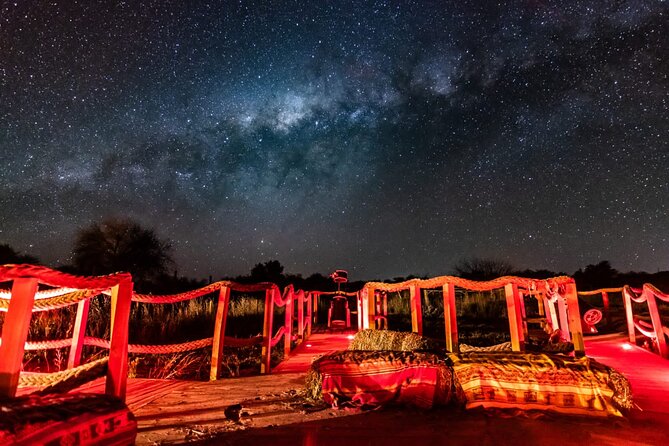
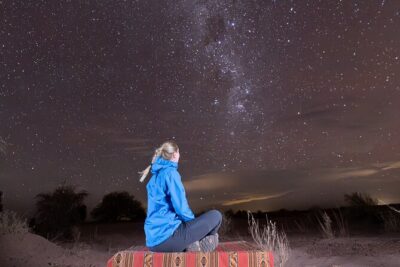
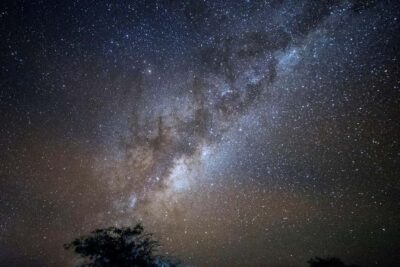
San Pedro de Atacama is famous for its clear, dark night skies, and this experience makes good use of that setting. Away from the bright city skies many people know at home, you can see far more stars with the naked eye. The Milky Way is not a vague pale stripe here. On a clear night, it can become the main feature above you.
The setting also gives the tour a welcome cultural angle. Instead of treating astronomy as only planets, galaxies, and technical terms, the experience introduces the night sky through Licanantay traditions. You learn to identify dark constellations, meaning shapes formed by the dark spaces in the Milky Way rather than only by bright stars.
That distinction is valuable. Most basic astronomy talks rely on Greek mythology and familiar names. Here, the emphasis is on how local Indigenous cultures understood and organized the sky. If you are curious about the connection between astronomy, memory, and culture, this part may be the most memorable element of the evening.
More Stargazing Tours in San Pedro de Atacama
- San Pedro de Atacama: Etno-Stargazing Tour with Transfer
★ 4.8 · 629 reviews - The Roofless Experience San Pedro de Atacama Stargazing Tour
★ 5.0 · 522 reviews - San Pedro de Atacama: Stargazing Experience
★ 4.7 · 489 reviews
Arriving at Observatorio Etno-Astronómico Licanantay
The stated meeting window is between 8:30 and 9 p.m., and the activity lasts about three hours. In practice, you should keep your evening flexible. Pickup and collection have not always run neatly, with some people waiting much longer than expected and receiving updates only after contacting their accommodation.
That does not mean your pickup will be late, but it is a sensible reason to confirm the meeting details before the evening begins. Keep your phone available and allow extra time after the advertised finish. One outing returned to the hostel around two and a half hours later, while another felt longer because refreshments were saved for the end.
The group size is capped at 15. That is a useful limit for a telescope-based activity. You are not standing in a huge crowd hoping for five seconds at the eyepiece. The experience can still feel social, but there is a better chance to hear the guide and ask a question.
The observatory is described as a homelike setting, and some accounts place it beside a road. That creates two different impressions. The friendly garden, lights, music, cats, and bonfire can make the night feel personal and relaxed. Passing car headlights, however, may interrupt the darkness for a moment.
The first lesson: stars through Licanantay eyes
The central talk covers stars, planets, constellations, and the cultural meaning of the sky. Guides use a laser to point out what you are seeing, which helps you connect the explanation with the actual sky above you.
Joaquin and Vicente are named as members of the guiding team. They have been praised for their warm hosting and their ability to explain astronomy in a friendly way. Joaquin has also taken extra time to show people objects they missed earlier, while Vicente has helped with astrophotography setup.
The quality of the talk depends partly on the language balance of your group. The activity is bilingual in Spanish and English, but one English-speaking participant felt that Spanish received about three times as much information. If you do not speak Spanish, you should be prepared for pauses and repeated explanations, though the experience can still be worthwhile.
Expect to spend a substantial part of the evening listening to the guide and watching the sky with the laser. One account described more than half the tour as explanation, followed by telescope viewing and photography. That is ideal if you want context. It may feel slow if you came expecting nonstop telescope time.
The talk also helps you understand why a full moon changes the experience. A nearly full moon can reduce visibility of faint objects, though it still offers a fine target of its own. The guides can explain what remains visible, and the moon, Jupiter, or Saturn may still make the night worthwhile.
What you may see through the telescopes
The tour promises the best deep-sky objects available that night, viewed through telescopes. Actual targets depend on the season, weather, moon, and visibility. Reports describe views of Saturn, Jupiter, the moon, and several stars and planets.
Two telescopes were mentioned during one evening. That is enough for a satisfying introduction, but you should set your expectations correctly. This is not a private observatory session with unlimited time on a long list of objects. One person recalled viewing around six stars and planets in total.
The quality of the night matters more than the printed target list. On a clear evening, the number of stars visible to the naked eye can be astonishing. On a moonlit or hazy night, the sky may show fewer faint objects. The guide’s ability to explain what you can see becomes especially important in those conditions.
You may also see shooting stars. Two were spotted during one outing, though this is luck rather than a promised feature. The wise approach is to enjoy them if they appear, but judge the tour by its teaching, telescope viewing, and photography rather than by rare events.
Other Atacama desert trips from San Pedro de Atacama:
- San Pedro de Atacama: El Tatio Geysers Tour
★ 4.7 · 943 reviews - Half Day Tour to Geysers del Tatio
★ 5.0 · 499 reviews - San Pedro Atacama: Baltinache Lagoons
★ 4.6 · 359 reviews - San Pedro de Atacama: Valle de la Luna Guided Tour
★ 4.4 · 312 reviews
Milky Way photographs and practical expectations
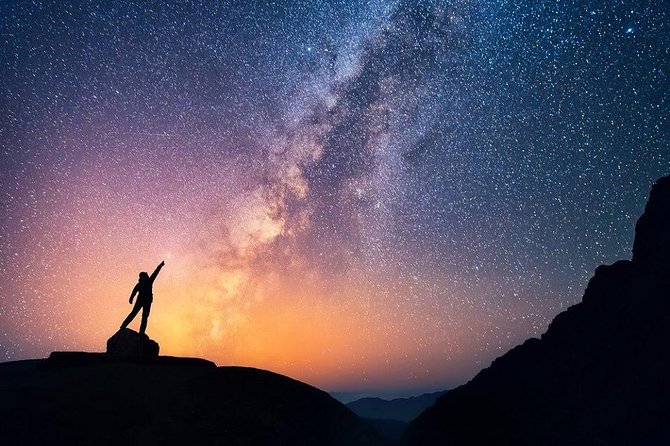
Real-time astrophotography is one of the strongest reasons to choose this tour. The team takes individual and group photographs, often placing you beneath a spectacular Milky Way background. Several people singled out the finished pictures as a highlight.
These photographs add real value to the $49 price. You are not only looking at the sky for a few minutes and leaving with a fading memory. You may receive a striking record of your night in the Atacama, which can be especially meaningful if stargazing is one of your main reasons for visiting Chile.
The photography can also take a fair share of the evening. Individual pictures require people to take turns, and group shots add another layer of waiting. If you prefer a quiet, uninterrupted sky session, this part may feel like a tradeoff. If you want a memorable image of yourself under the stars, it is a major plus.
One guide has helped an amateur photographer set up for astrophotography, so people with a serious interest in night photography may find useful personal assistance. The information does not specify camera equipment, files, or delivery timing, so ask those questions before booking if the photographs are central to your plans.
Staying warm in the Atacama night
Desert days can be hot, but the temperature drops after sunset. The organizers appear to understand this well. Hot tea or coffee may greet you at the beginning, and lap blankets are provided while you listen to the talk.
You should still bring warm clothing. The available details do not specify the exact clothing or blanket supply for every departure, and cold can spoil an otherwise excellent astronomy session. A warm layer is a small burden compared with spending three hours sitting outdoors after dark.
The refreshments make the experience feel more like a hosted evening than a technical lecture. At the end, you may find wine, a cocktail, pisco sour, hot drinks, snacks, and a garden reception with music. A bonfire has also been part of the welcome atmosphere.
There is a practical catch. Some people felt the snacks and drinks came too late, since the reception extended an already late night. If you get hungry early, eat before pickup or bring anything permitted by the operator. The supplied information does not promise a full meal.
Is $49 a fair price?
At about $49 per person, I consider this a reasonable price if you value the full package. You receive roughly three hours of guided astronomy, telescope access, cultural interpretation, photography, transportation arrangements, and refreshments. The small group limit makes the cost more attractive than a large, basic stargazing outing.
The value is strongest when the sky is clear and the guides have enough time to give everyone telescope access and photos. It is also strong for first-time stargazers who want someone to explain what they are seeing. You do not need to arrive with astronomy knowledge to enjoy the evening.
The value becomes less certain if your main goal is advanced astrophotography or a long, silent session under perfectly dark skies. Passing headlights have been an issue at the site, and the amount of telescope time may feel modest. A bilingual presentation can also mean less English explanation than you expected.
I would compare this experience with any other astronomy outing you are considering, especially if you plan to book several nights. Weather can cancel one tour while another goes ahead, so scheduling more than one evening may improve your chances, though no clear night is guaranteed.
Weather, moonlight, and cancellations
This activity requires good weather. If poor conditions cancel the outing, you should be offered another date or a full refund. That is sensible for astronomy, since clouds can erase the very feature you came to see.
The moon deserves attention when you choose your date. A nearly full moon can limit faint-star visibility, but it may provide an excellent telescope target. If you have several possible evenings, ask about moon conditions and choose the darker night if your priority is the Milky Way and faint deep-sky objects.
You can cancel for a full refund up to 24 hours before the start time. Changes or cancellations made less than 24 hours ahead are not accepted for a refund. The minimum group requirement can also cause a cancellation, in which case another date, another experience, or a full refund should be offered.
One serious concern involves availability. A booking was reportedly accepted and then declared unavailable only 13 hours later, while another person described waiting without a pickup response and being refused a refund. These accounts are not consistent with the otherwise warm feedback, but they are important enough that I would confirm the booking, pickup, and refund contact details directly.
Who will enjoy this evening most?
I would recommend the tour to you if you want a friendly introduction to Atacama astronomy rather than a strictly scientific observatory session. It suits couples, families, solo visitors, and friends who like learning while enjoying a social evening.
It is particularly well matched to anyone who wants:
- A cultural explanation of the stars beyond Greek mythology
- Telescope views of planets and the moon
- A Milky Way portrait
- A small group rather than a mass outing
- Hot drinks, blankets, snacks, and a cocktail
- Help identifying stars and constellations
You may want another option if you need precise pickup times, a completely dark and isolated site, extensive English-only instruction, or a long list of telescope targets. You should also be patient with bilingual pacing and photography queues.
Final verdict: should you book it?
I would book this tour if your ideal night includes stories, stargazing, photographs, and conversation. The strongest parts are the Licanantay perspective, the passionate guiding by Joaquin and Vicente, the chance to see planets through telescopes, and the warm reception afterward.
I would not book it blindly. Confirm availability and pickup before the evening, dress warmly, and ask how photographs are handled. If the moon is bright or clouds threaten, understand that the experience may shift from faint deep-sky viewing toward planets, the moon, and the guide’s explanations.
For about $49, this is a good-value introduction to the Atacama sky, with a few rough edges in coordination. Choose it for the human touch and cultural content, not for a perfectly controlled observatory program.
FAQ
Where does the astronomical tour take place?
The activity takes place at Observatorio Etno-Astronómico Licanantay in San Pedro de Atacama, Chile.
How long does the tour last?
The tour lasts approximately three hours.
What time does the experience begin?
The stated meeting window is from 8:30 p.m. to 9 p.m., Monday through Sunday.
How many people can join the tour?
The maximum group size is 15 people.
Is transportation included?
Transportation or collection is part of the arrangements described for the experience, but pickup has sometimes been confusing or delayed. Confirm the details before the evening.
Is the tour offered in English?
The activity can be bilingual in Spanish and English. The amount of English explanation may vary depending on the group.
What can I see through the telescopes?
Possible targets include Saturn, Jupiter, the moon, stars, planets, and other deep-sky objects visible that night. Exact viewing depends on weather, moonlight, and visibility.
Are photographs included?
Real-time astrophotography is part of the experience, and the team takes individual and group photos with the Milky Way background. The supplied information does not specify the delivery method or exact number of photographs.
Are food and drinks provided?
Hot tea or coffee, blankets, snacks, wine, cocktails, and pisco sour have been part of the evening. A full meal is not specified.
Can I cancel for a refund?
You can cancel at least 24 hours before the start time for a full refund. Poor weather or failure to meet the minimum group size may also lead to another date or a full refund.
Just added around San Pedro de Atacama
- Vallecito★ 4.7 · 13 reviews
- Atacama Desert and Magic Bus Visit★ 4.8 · 15 reviews
- San Pedro de Atacama: Valle de la luna★ 3.0 · 3 reviews
- Valle de la Luna: A Moon-Like Escape in Atacama★ 5.0 · 3 reviews
- 3 Perfect Days in Atacama + Transfer★ 4.5 · 3 reviews
- Atacama Stargazing Tour Under One of the World’s Clearest Skies★ 4.0 · 3 reviews
- Tour to Laguna Cejar and Tibenquinche★ 4.5 · 7 reviews
- Valley of the Moon In San Pedro de Atacama★ 4.5 · 9 reviews
Atacama Desert Tours, compared.
The Roofless Experience San Pedro de Atacama Stargazing Tour
Read our review →
Browse the lists this tour appears in