
Reviewed · ATACAMA DESERT TOURS
Astronomical Experience with Astrophotography in Atacama
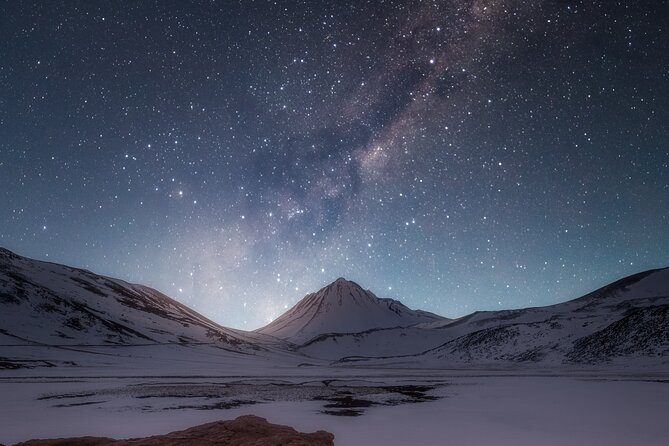
The desert sky does the heavy lifting. This evening tour takes you 10 kilometers from San Pedro de Atacama to a low-light site, where the stars have room to show themselves. I like the telescope viewing, which reveals planets and details hidden from the naked eye, and I like the final astrophotography session, which gives you a personal souvenir rather than only a memory. The main catch is simple: clouds, moonlight, or poor conditions can weaken the show.
The experience costs $42 and lasts about two and a half hours, starting at 8 pm. I also appreciate the Andean worldview talk, since it adds local meaning to what could otherwise be just a technical astronomy lesson. English explanations have not always been evenly balanced, and photo delivery has occasionally needed follow-up, so keep those points in mind before booking.
In This Review
- Atacama stargazing at a glance
- Leaving San Pedro at 8 pm
- The Andean worldview comes first
- Looking at planets through the telescope
- Wine, drinks, and a small night snack
- The astrophotography session
- How weather and moonlight change the experience
- Is $42 good value?
- Who will enjoy this evening most?
- Practical booking advice for San Pedro
- Should you book the Atacama astrophotography tour?
- FAQ
- Where does the tour start?
- How far is the observing site from San Pedro de Atacama?
- How long does the experience last?
- How many people can join the tour?
- What are the three stages of the tour?
- What happens if poor weather cancels the tour?
- Can I cancel for a full refund?
Atacama stargazing at a glance
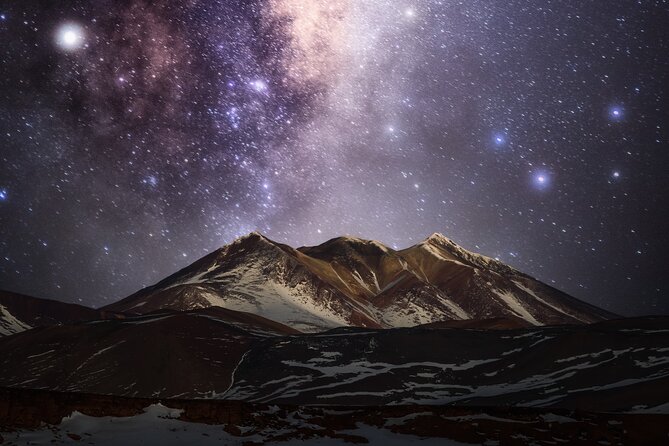
- A 10-kilometer trip from San Pedro: You leave the town’s lights behind and reach a darker place built for night-sky viewing.
- Three-part evening program: The tour combines an Andean worldview talk, telescope observation, and a posed photo session.
- Planets through a telescope: You can see celestial details that are not visible with your eyes alone.
- Small group size: The maximum is 14 people, enough for a shared evening without a huge crowd.
- Drinks and a midnight-style snack: The outing has included wine, drinks, and a small bite during the night.
- Weather matters: Poor conditions can lead to a new date or a full refund, while a brightening moon may still reduce star visibility.
Leaving San Pedro at 8 pm
The evening begins at the stated meeting point in San Pedro de Atacama at 8 pm. From there, transportation takes you roughly 10 kilometers outside town to the observing site. That short transfer matters because artificial light is the enemy of a good star field, and even a modest distance from town can make the sky feel much larger.
The schedule is compact. You have about 150 minutes for the full program, including the drive, explanations, telescope time, refreshments, and photographs. This is useful if you are fitting the activity around daytime excursions, though it also means the three stages will not feel like long, slow sessions.
The group limit of 14 is a reasonable size for astronomy. You should have a better chance of getting near the telescope than you would in a large coach group, and the guide can keep the talk fairly personal. Still, this is a shared activity, not a private observing session. If your priority is total control over the timing or camera setup, a private tour would be a different kind of experience.
The site is described as having very little light pollution. That is the key setting, not a decorative extra. You are not simply looking up from a hotel courtyard. You are being taken to a place selected for night-sky observation, where the darkness is part of the experience.
More Stargazing Tours in San Pedro de Atacama
- San Pedro de Atacama: Etno-Stargazing Tour with Transfer
★ 4.8 · 629 reviews - The Roofless Experience San Pedro de Atacama Stargazing Tour
★ 5.0 · 522 reviews - San Pedro de Atacama: Stargazing Experience
★ 4.7 · 489 reviews
The Andean worldview comes first
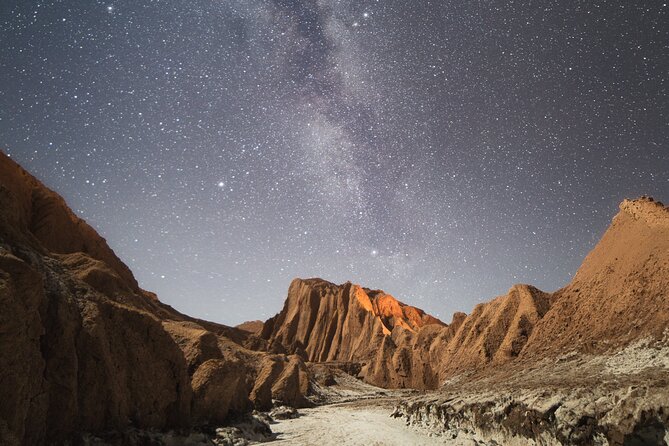
The first stage is a talk about the Andean worldview. This gives the evening a cultural frame before the technical astronomy begins. Instead of treating the stars only as distant objects measured through equipment, the program introduces a way of understanding the sky connected to the region.
That makes this opening talk especially useful for visitors who want more than a photo session. The Atacama night can be visually dramatic, but a good explanation helps you pay attention to what you are seeing and why the sky has long mattered to people living under it.
The exact balance of languages can be important. English-speaking participants have reported that much of one session was delivered in Spanish, with only about 20 percent in English. The operator acknowledged this concern and said it would work toward a better balance. If you do not understand Spanish, ask at the start how the talk will be handled so you know what to expect.
The guide has also received praise for translating everything into English when there were only a few English speakers in the group. That suggests the language experience may vary with the guide, group makeup, and timing. I would treat English support as available, but not assume every explanation will receive equal time in both languages.
Looking at planets through the telescope
The second stage uses a telescope to show planets and details that you cannot see with the naked eye. This is where the tour shifts from broad sky watching to focused observation. The difference is easy to understand: the unaided eye gives you the scale and mood of the sky, while the telescope gives you a closer look at selected objects.
You should not expect a full observatory visit with a long list of targets. The program lasts only about two and a half hours and includes several parts. Instead, think of the telescope as a guided highlight. The value lies in having someone point out what to look at and help you notice details that would otherwise pass by.
The experience has earned strong praise for the astronomy lesson and for helping people learn how to look at the sky in practice. That is a good sign for beginners. You do not need to arrive with a working knowledge of constellations or telescope equipment. The activity is designed as an introduction, especially for someone seeing the southern hemisphere sky for the first time.
That southern hemisphere angle is one of the tour’s best features. If you come from North America, Europe, or another northern location, the night sky can feel unfamiliar. A guided introduction helps you get your bearings instead of simply standing in the dark and hoping the important stars reveal themselves.
Wine, drinks, and a small night snack
The evening has included wine, drinks, and a midnight snack. These refreshments give the program a social side and help break up the waiting time between looking through the telescope and setting up photographs.
I would not book this as a food experience. The snack is a supporting detail, not the main event, and the supplied information does not specify a menu. But a drink in the cold desert night can be welcome, and it adds a relaxed touch to what might otherwise feel like a formal lesson.
Keep your expectations sensible. The strongest parts of the outing are the dark setting, the telescope, and the photos. The refreshments add comfort and atmosphere, but they do not change the basic value of the tour.
Other Atacama desert trips from San Pedro de Atacama:
- San Pedro de Atacama: El Tatio Geysers Tour
★ 4.7 · 943 reviews - Half Day Tour to Geysers del Tatio
★ 5.0 · 499 reviews - San Pedro Atacama: Baltinache Lagoons
★ 4.6 · 359 reviews - San Pedro de Atacama: Valle de la Luna Guided Tour
★ 4.4 · 312 reviews
The astrophotography session
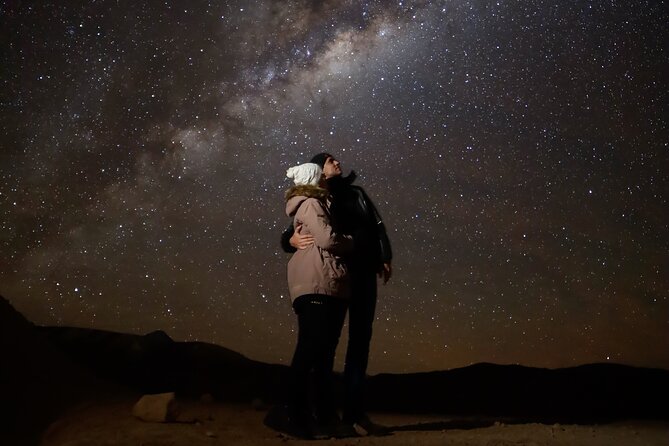
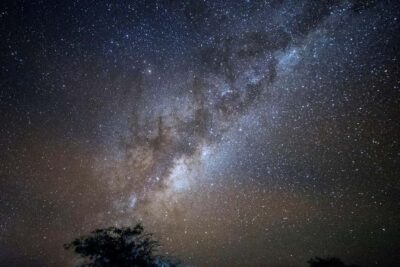
The final stage is a photo session with the starry sky behind you. This is a smart addition because many people can see a beautiful night sky but struggle to record it with an ordinary phone or camera. The tour gives you a planned image rather than leaving you to guess at exposure, framing, or timing.
The promotional images use high-resolution equipment and flash to make both the person and the stars visible. That is worth understanding before you arrive. Your finished picture may look more polished than a quick handheld snapshot, but the result depends on the sky, the equipment, and the conditions that night.
Two digital photographs have been promised in connection with the experience. At least one participant needed to contact the operator through WhatsApp after the images were not delivered. The operator apologized and offered to send them. My practical advice is to confirm how and when the files will arrive before leaving the site, and save the company’s WhatsApp contact until you have received them.
The photo session is most useful if you want a concrete reminder of the evening. The telescope view disappears when you leave, and the sky may look different on another night. A well-made photograph gives you something to take home, though you should not judge the whole tour only by the image.
How weather and moonlight change the experience
Astronomy tours have one unavoidable weakness: the sky makes the final decision. This outing requires good weather, and poor conditions can lead to cancellation. If the operator cancels because of weather, you are offered another date or a full refund.
That policy is fair, but the practical effect can be serious if you have built a tightly packed itinerary. The operator has said it contacts participants on the same day when the forecast makes the sky unsuitable. Check your messages on the afternoon of the tour and keep some flexibility in your schedule.
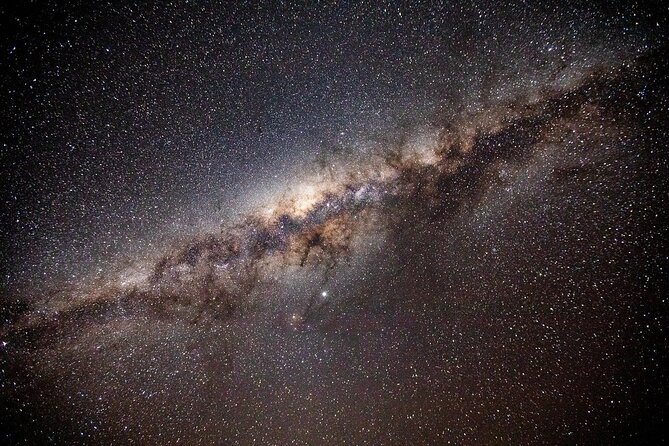
Cloud is not the only concern. A growing moon can brighten the sky and make stars harder to see, even when the weather is clear. One participant felt the operator should have explained the moon conditions in advance and offered a free change of date or cancellation. That is a useful warning. Before booking, ask how much moonlight is expected on your chosen night.
You also need to separate a full cancellation from a disappointing but technically possible outing. If clouds make the sky unusable, the tour may be called off. If the moon is bright, the activity may still run, but the stars can be less dramatic. The operator’s weather policy does not necessarily mean every moonlit night qualifies for a refund.
For the best chance of a strong result, choose a date with favorable weather and less moonlight when possible. The tour’s central attraction is not guaranteed simply because you have arrived in the Atacama Desert.
Is $42 good value?
At $42 per person, this is reasonably priced for a guided evening that includes transport from San Pedro, a dark-sky location, an astronomy talk, telescope viewing, refreshments, and astrophotography. You are paying for several connected elements rather than only a ride to a viewpoint.
The value is strongest for first-time stargazers. If you would otherwise have no telescope access and no idea how to photograph the sky, the tour solves both problems in one evening. The cultural talk also gives the experience more depth than a simple stop-and-look outing.
The value is weaker if you already own good night-sky equipment or have arranged another astronomy program. In that case, the group format and short schedule may feel basic. The tour is an introduction, not a specialist workshop in astrophotography.
The group maximum of 14 helps keep the price moderate while avoiding the scale of a large bus outing. You should expect a communal experience, with some waiting as people take their turns at the telescope and in front of the camera. For many people, that tradeoff is sensible at this price.
Who will enjoy this evening most?
I would recommend the tour to someone who wants a gentle introduction to astronomy without needing technical preparation. Families, couples, solo visitors, and anyone curious about the southern hemisphere sky can all find something useful here, provided they accept that the sky may not cooperate.
It also suits visitors who want a souvenir photo. The image session gives the night a clear finish and may be especially appealing if you are not carrying a tripod or camera suited to low-light work.
The tour may be less suitable for a serious astrophotographer. The details provided do not promise extensive instruction in camera settings, long exposure work, or personal equipment use. It is better viewed as a guided experience with astrophotography included, not as a dedicated photography course.
English speakers should pay attention to language arrangements. English translation has sometimes been excellent, but one account describes an uneven Spanish-English split. Asking about the planned language balance before departure can prevent disappointment.
Practical booking advice for San Pedro
Book with the weather in mind, and avoid placing the tour on the final night of your trip if possible. An astronomical activity can be canceled or moved, and a little schedule space gives you a better chance of fitting in an alternative date.
The tour is often booked about 31 days ahead, which suggests that advance planning is sensible during busy periods. Confirmation is received when you book, and the activity allows most people to participate.
You can cancel for a full refund up to 24 hours before the 8 pm start time. Changes made inside that 24-hour window are not accepted, and cancellations inside that period are not refunded. The time cutoffs use local time in San Pedro de Atacama.
Wear clothing suitable for spending time outdoors at night, though the supplied information does not state specific temperatures or equipment requirements. At minimum, arrive ready for a dark outdoor setting and a late finish. The program is only about two and a half hours, but the return comes well after the evening begins.
Should you book the Atacama astrophotography tour?
Book it if you want an affordable first look at the southern hemisphere sky, a telescope session, an Andean perspective, and a photo to remember the night. The combination is well judged, and the $42 price makes sense when all the pieces run as planned.
I would hesitate only if your dates are rigid, the moon will be bright, or you need guaranteed English interpretation throughout every talk. I would also confirm the digital photo arrangement before leaving and check the forecast on the day itself.
For most curious visitors, this is a good-value evening introduction rather than a high-end astronomy expedition. Go with realistic expectations, choose the clearest and darkest available night, and you have a strong chance of getting one of San Pedro’s most memorable after-dark experiences.
FAQ
Where does the tour start?
The tour starts at a meeting point in San Pedro de Atacama at 8 pm.
How far is the observing site from San Pedro de Atacama?
The activity site is about 10 kilometers from San Pedro de Atacama.
How long does the experience last?
The experience lasts approximately two hours and 30 minutes.
How many people can join the tour?
The maximum group size is 14 people.
What are the three stages of the tour?
The program includes a talk about the Andean worldview, observation of planets and other details through a telescope, and a photo session with the starry sky behind you.
What happens if poor weather cancels the tour?
If poor weather causes a cancellation, you will be offered a different date or a full refund.
Can I cancel for a full refund?
Yes. You can cancel at least 24 hours before the local start time for a full refund. Cancellations or changes made less than 24 hours before the experience are not accepted for a refund.
Just added around San Pedro de Atacama
- Vallecito★ 4.7 · 13 reviews
- Atacama Desert and Magic Bus Visit★ 4.8 · 15 reviews
- San Pedro de Atacama: Valle de la luna★ 3.0 · 3 reviews
- Valle de la Luna: A Moon-Like Escape in Atacama★ 5.0 · 3 reviews
- 3 Perfect Days in Atacama + Transfer★ 4.5 · 3 reviews
- Atacama Stargazing Tour Under One of the World’s Clearest Skies★ 4.0 · 3 reviews
- Valley of the Moon In San Pedro de Atacama★ 4.5 · 9 reviews
- Moon Valley Tour, the Best Seller★ 4.5 · 2 reviews
Atacama Desert Tours, compared.
The Roofless Experience San Pedro de Atacama Stargazing Tour
Read our review →
Browse the lists this tour appears in