
Reviewed · ATACAMA DESERT TOURS
5 Fantastic Tours in the Atacama Desert in 3 Days
The Atacama saves its best colors for the patient visitor. This three-day program links San Pedro’s major sights, from Rainbow Valley and Moon Valley to salt lagoons and the high-altitude El Tatio geysers. I like the small groups of up to 15 people, and I like that breakfast or snacks are included on every outing. The main catch is important: the advertised five tours are actually four excursions, so check the schedule and value before booking.
The plan makes good use of a short stay, with two outings on the first day and one each on the next two mornings. The tradeoff is that entrance fees are extra, instructions about water and clothing may differ between guides, and booking the same trips separately in San Pedro may cost the same or less.
In This Review
- Key points before you book
- What the $240 package really gives you
- Day 1 morning: petroglyphs and the colors of Rainbow Valley
- Day 1 afternoon: Moon Valley under changing light
- Day 2: floating in Cejar Lagoon and the Salar de Atacama
- Day 3 before sunrise: El Tatio at 4,200 meters
- Guides, transport, and the small-group setup
- How to plan the three days sensibly
- Who will get the most from this tour?
- Should you book the three-day Atacama package?
- FAQ
- How many tours are included in the three-day program?
- What languages are available?
- What is included in the price?
- Are entrance fees included?
- Can I swim during the Cejar Lagoon tour?
- What time does the El Tatio tour begin?
- Does pickup cover every accommodation near San Pedro?
Key points before you book
- Four excursions, not five: The package includes Rainbow Valley, Moon Valley, the Cejar Lagoon area, and El Tatio.
- Small groups of up to 15: This is a more manageable size than a large coach, especially at viewpoints and during early morning departures.
- A full first day: Rainbow Valley begins around 8:00 to 8:30 in the morning, followed by Moon Valley pickup around 15:00 to 15:30.
- The altitude changes quickly: El Tatio reaches about 4,200 meters, while the Cejar outing includes swimming in salt water.
- Meals are built in: Expect breakfast at Rainbow Valley and El Tatio, plus a snack or cocktail at Moon Valley and a snack at Cejar.
- Budget for entrance fees: The listed fees total 56,900 Chilean pesos per person, paid separately from the $240 tour price.
What the $240 package really gives you
At $240 per person, this is not simply a transport deal. You are paying for four guided outings spread across three days, hotel pickup within San Pedro’s urban area, and food at each excursion. The price may be fair if you want one booking, coordinated pickup, and a ready-made schedule.
The value is less clear if you have time to visit local agencies in San Pedro. A booking made in town may let you reserve the same trips separately, possibly for the same price or less. You also gain control over the order, which matters if you want to place the most strenuous outing on a day when you feel strongest.
The extra charges are significant. Current listed entrance fees are:
- Rainbow Valley: 10,000 Chilean pesos
- Moon Valley: 10,900 Chilean pesos
- Cejar Lagoon area: 21,000 Chilean pesos
- El Tatio geysers: 15,000 Chilean pesos
That adds up to 56,900 Chilean pesos per person. The fees are paid at the sites, and cash may be required, so carry enough Chilean currency. This is one area where a little preparation saves a lot of fumbling at the gate.
The package allows cancellation up to 24 hours before departure for a full refund, and you can reserve without paying immediately. That flexibility helps if your arrival into northern Chile is uncertain, but it does not remove the need to confirm each pickup time.
Other Atacama desert trips from San Pedro De Atacama:
- San Pedro de Atacama: El Tatio Geysers Tour
★ 4.7 · 943 reviews - San Pedro de Atacama: Etno-Stargazing Tour with Transfer
★ 4.8 · 629 reviews - The Roofless Experience San Pedro de Atacama Stargazing Tour
★ 5.0 · 522 reviews
Day 1 morning: petroglyphs and the colors of Rainbow Valley
Your first pickup is scheduled between 8:00 and 8:30. The vehicle heads west from San Pedro toward the Domeyko Mountain Range, a long formation running parallel to the Andes. This first outing is a good choice for anyone who wants more than desert scenery. It adds rock art, old routes, and local geography to the day.
The stop at Yerbas Buenas is especially worthwhile. The area contains one of the region’s important groups of petroglyphs, connected to Indigenous caravan routes that once crossed the desert. The rock carvings give you a sense of the people who moved through this harsh country long before roads and tour vans appeared.
After Yerbas Buenas, the route crosses Matancilla, an area noted for its plant and animal life. Do not expect a lush stop. In the Atacama, even a small patch of vegetation or a glimpse of wildlife feels notable because the surrounding terrain is so dry.
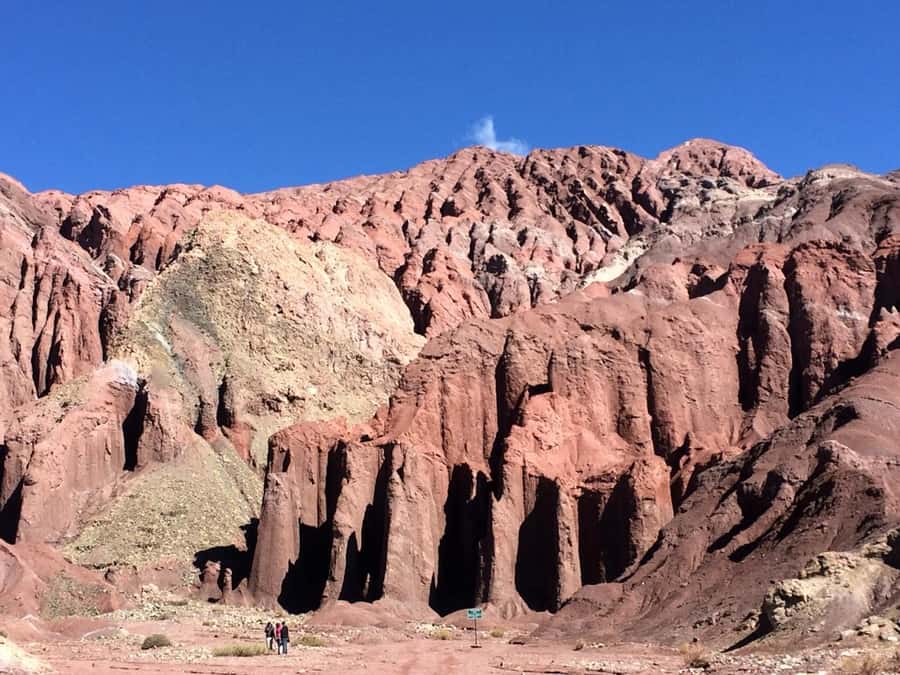
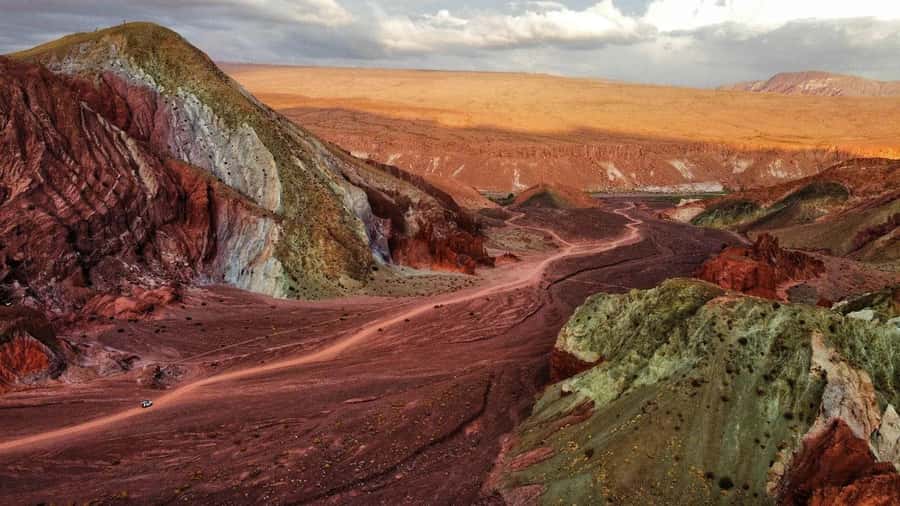
Rainbow Valley gets its name from the layers of color in the hills. Depending on the light, you may see red, brown, green, white, yellow, and earth tones set against salt and a strong blue sky. The colors are geological rather than painted, and the effect changes as clouds and sunlight move across the ridges.
The final viewpoint looks toward Rainbow Canyon. Here, the guide explains the geographical story of the area along with its cultural connections. I like this outing because it combines scenery with context. If you only want famous photo stops, Moon Valley may feel more dramatic, but Rainbow Valley gives the day a broader sense of place.
Breakfast is included. Since the departure is in the morning and the route extends away from San Pedro, that meal is practical rather than decorative. Still, confirm the exact food arrangement and bring water. One useful lesson from the mixed instructions is to ask your guide directly what clothing and supplies are needed for that day.
Day 1 afternoon: Moon Valley under changing light
Pickup for Moon Valley runs from 15:00 to 15:30. The timing is designed around the late-day light, when the valley’s salt surfaces and rock formations begin to shift in color. After a morning in Rainbow Valley, this second excursion gives you a different kind of desert scenery without requiring another full day.
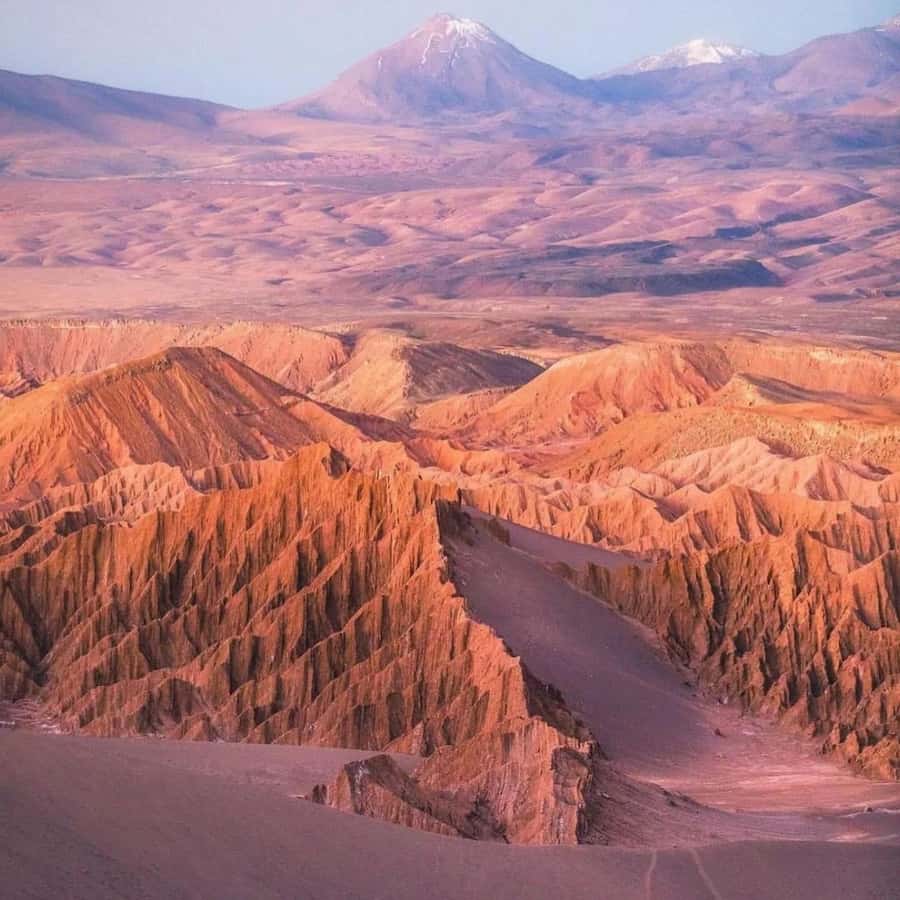
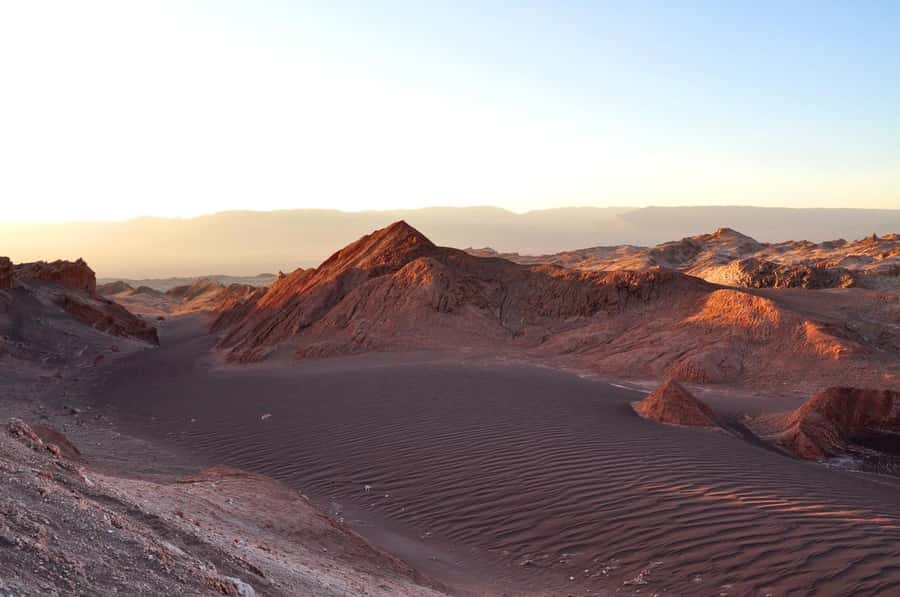
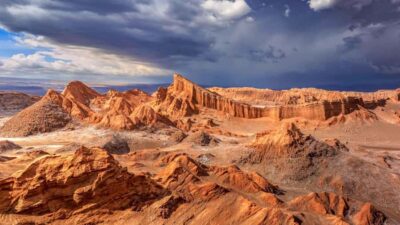
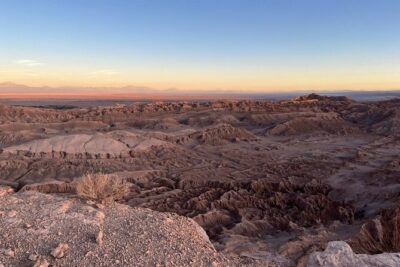
Moon Valley is shaped by erosion and salt. Its famous formations include the Tres Marías, the Canyon, and the Amphitheater. The names are easy to remember, and each stop gives you a different view of the folded rock and pale mineral surfaces.
The route crosses the valley rather than stopping at only one roadside viewpoint. That matters because the scenery changes as you move between formations. You may walk on uneven ground, so sensible shoes are a better choice than anything chosen only for photographs.
The Duna Mayor provides one of the classic elevated views in the area. From higher ground, the desert opens around you, with volcanoes forming the distant horizon. The terrain can look almost unreal, but the appeal is not just that it resembles another planet. It is the combination of silence, salt, bare rock, and huge scale.
The outing finishes at the Licarantay viewpoint for sunset. This is the emotional high point of the first day. The desert shifts from pale to gold, rose, and deeper shadow, while the volcanoes remain visible in the distance.
A cocktail and snack are included. That makes the late return more comfortable, especially after beginning the day in the morning. I would still carry a bottle of water, since the program covers several stops and the air is exceptionally dry.
Day 2: floating in Cejar Lagoon and the Salar de Atacama
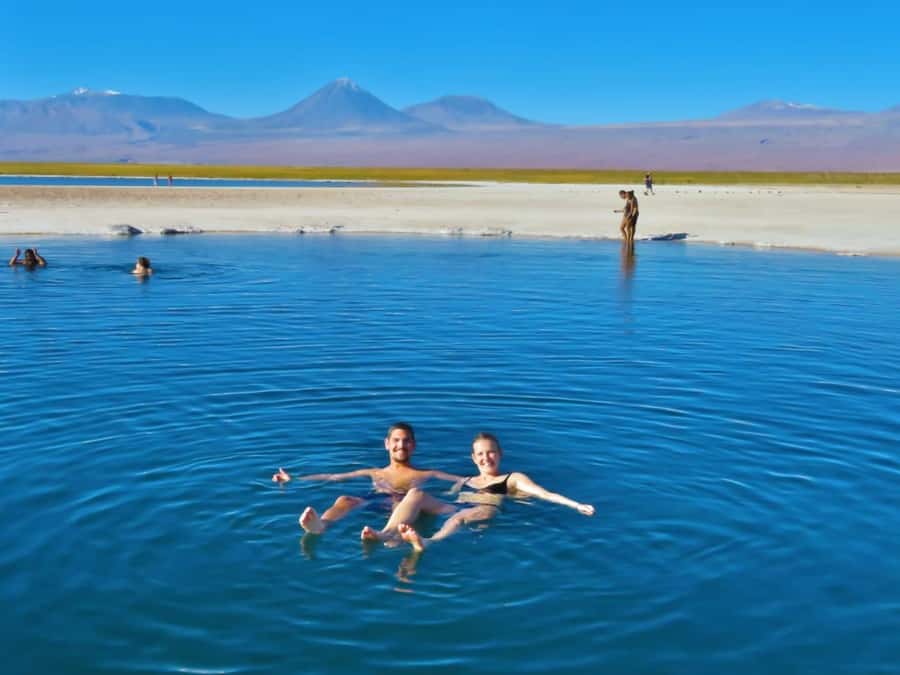
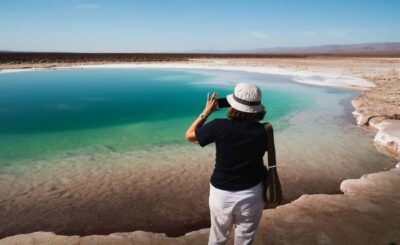
The second day visits lagoons within the Salar de Atacama, Chile’s largest salt flat. This excursion is built around contrast: deep water wells, white salt, green and yellow grasses, turquoise pools, and volcanoes beyond the flat expanse.
The first stop is the Ojos del Salar, two deep freshwater wells surrounded by desert. The name means Eyes of the Salt Flat, and the pools make a striking sight because they appear suddenly in such an open, dry setting. Swimming is included at this stop, so pack a swimsuit and a change of clothing.
The route then continues to Tebinquinche Lagoon. A path allows you to walk beside the water and salt, where the sky seems to blend into the flat white ground. This is a quieter stop than the swimming area, and it gives you time to look closely at the changing surface rather than rushing from one photo point to another.
Laguna Cejar and Laguna Piedra provide the most unusual activity of the trip. At Laguna Piedra, the salt concentration creates a floating effect similar to the Dead Sea. You can enter the water and experience the sensation yourself, though the exact swimming arrangements should be confirmed with the guide on the day.
The surrounding grasses add green and yellow color to the turquoise water. Volcanoes rise beyond the lagoons, creating the sort of wide view that makes the Salar de Atacama memorable. A snack is provided while you watch the sunset over the lagoon.
There are practical points to keep in mind. The Cejar entrance fee is the highest of the four, at 21,000 Chilean pesos. Since the activity includes water, bring a swimsuit, towel, dry clothes, and whatever personal items you need after swimming. The supplied information confirms the swimming experience, but it does not specify changing facilities, so do not assume a full changing-room setup.
A few more San Pedro De Atacama trips worth comparing side by side
- San Pedro de Atacama: 3-Day Activity Combo with 4 Tours
★ 4.6 · 247 reviews - 3-Day Tour in San Pedro de Atacama
★ 4.5 · 68 reviews - Unique 3-Day Tour in San Pedro de Atacama
★ 4.5 · 43 reviews - 3 Days and 4 Tours in San Pedro de Atacama
★ 4.5 · 39 reviews
Day 3 before sunrise: El Tatio at 4,200 meters
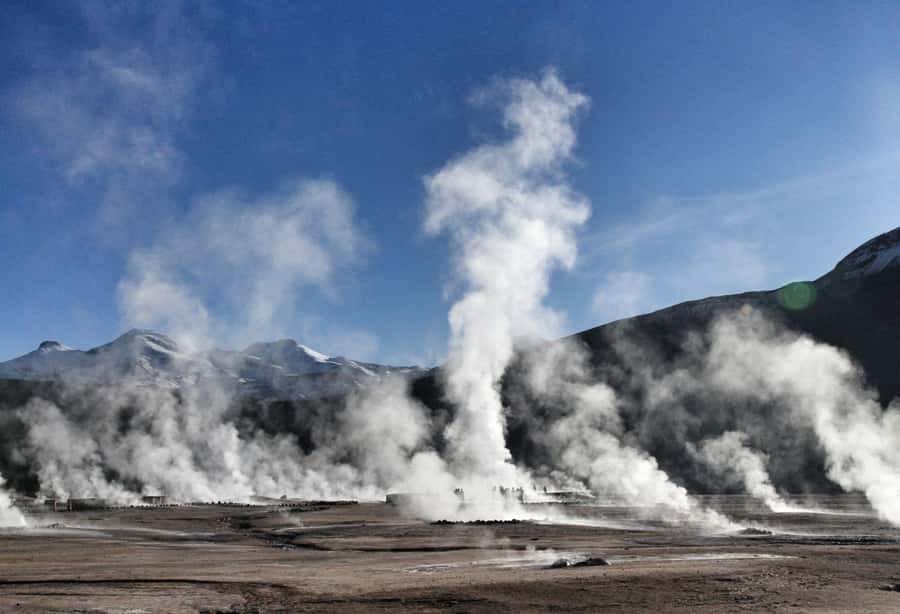
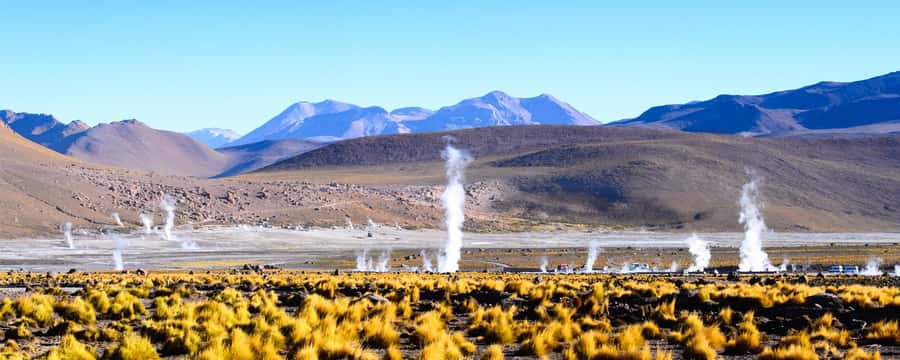
The final outing starts very early, with hotel pickup between 5:00 and 5:30. After about an hour and a half on the road, you reach El Tatio, high in the Andes at roughly 4,200 meters. The early start is not a flaw here. The geothermal activity is best appreciated in the cold morning air, when steam columns are especially visible.
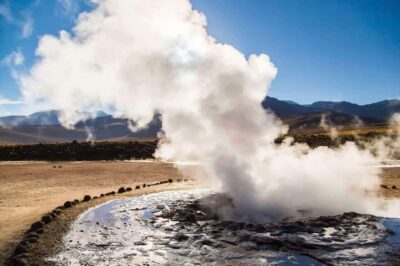
El Tatio contains about 80 steaming geysers, making it one of the world’s notable geothermal fields. The first view is likely to be a broad scene of vapor rising from the ground, followed by a guided walk among the geothermal features.
The combination of altitude and cold is the main challenge. Dress warmly, carry water, and take the first part of the morning at a calm pace. The information provided does not specify how the guides handle altitude discomfort, so you should be ready to tell them if you feel unwell.
Breakfast is served beside this unusual natural setting. It is a useful inclusion because the departure is before dawn and the drive is long. The meal also gives you a chance to warm up before walking around the geothermal field.
El Tatio is not a casual late-morning stop. You need to be comfortable with the very early departure and the high elevation. For many people, it is the most memorable excursion because the steaming ground feels powerful and immediate. For others, the cold and altitude may make the morning harder than the colorful valleys.
The program finishes at Plazoleta La Apacheta rather than necessarily returning you to your accommodation. Confirm this detail before scheduling a flight, bus, or other fixed activity. The listed pickup service covers accommodations in San Pedro’s urban area, but not places outside that radius, nearby ayllus such as Quitor, Yaye, Checar, Sequitor, Solor, and Coyo, or accommodation in Toconao.
Guides, transport, and the small-group setup
The tours operate in English, Portuguese, and Spanish. A live guide accompanies the outings, and pickup is included from hotels within the urban area of San Pedro. Pickup coordination has been reliable and on time, with WhatsApp used for arrangements.
A limit of 15 people is helpful in the Atacama. You spend less time gathering a large crowd, and a smaller group usually makes it easier to hear explanations at the petroglyphs and geothermal field. It also helps at viewpoints, where space can be limited.
The organization has received strong marks for smooth scheduling, friendly guides, dependable pickup, and enough time at the stops. Food is another repeated strength. The meals are not just a line in the description: breakfast is particularly welcome on the Rainbow Valley and El Tatio departures, while the snacks make the long afternoon and sunset stops easier.
The weak point is consistency. Instructions about water, clothing, and when to pay entrance fees have not always been uniform between the online information and the guides. I would ask three questions before each departure: what should I wear, what should I bring, and how will payment work today?
How to plan the three days sensibly
The first day is the busiest. Rainbow Valley begins in the morning, and Moon Valley begins in the afternoon. You should avoid scheduling another fixed activity between them, since pickup windows and road conditions can shift.
Day two is less rushed in terms of departure time, but the lagoon visit includes walking, swimming, and sunset viewing. Keep your clothing practical and protect personal items from salt water. The $21,000 entrance fee also makes this the day when your cash planning matters most.
Day three requires the earliest alarm. If you are arriving in San Pedro immediately before this package begins, make sure you are ready for the 5:00 to 5:30 pickup. The package is best for a three-day stay when you want the main sights without spending time comparing separate departures.
The order is fixed enough that you should consider your own energy. Rainbow Valley and Moon Valley together create a long opening day. El Tatio then asks you to wake before sunrise and travel to high altitude. If you prefer a slower pace, separate bookings may be better, even if the final cost is similar.
Who will get the most from this tour?
I would choose this package if you have only three days in San Pedro, want the headline sights, prefer a small group, and value having transport and meals organized in advance. It suits first-time visitors who do not want to negotiate with several local agencies after arrival.
It also works well if you want variety. The program includes petroglyphs, colored hills, eroded rock, sunset views, salt lagoons, swimming, and geothermal activity. Few short itineraries cover such different parts of the Atacama.
I would hesitate if price is your top concern or if you want to choose your own order. The four excursions can be booked individually in San Pedro, sometimes for the same price or less. I would also think twice if you dislike early mornings, high altitude, or tightly packed schedules.
The overall rating of 4.4 out of 5 reflects that balance. The strongest praise centers on organization, scenery, reliable pickup, friendly guides, generous time at stops, and included food. The main complaints are the inaccurate five-tour wording, mixed pre-trip instructions, and the possibility of cheaper local booking.
Should you book the three-day Atacama package?
Book it if you want a ready-made three-day plan with four major excursions, small groups, meals, and multilingual guides. The schedule makes efficient use of limited time, and the scenery covers nearly every classic Atacama experience.
Before paying, compare the total cost with local agencies, add the 56,900 Chilean pesos in entrance fees, and confirm pickup, payment method, clothing, water, and the final drop-off point. If those details are clear and convenience matters more than designing your own schedule, this is a practical choice. If flexibility and the lowest possible price matter more, reserve the outings separately and choose the order yourself.
FAQ
How many tours are included in the three-day program?
Four excursions are included: Rainbow Valley, Moon Valley, the Cejar Lagoon area, and El Tatio geysers. Despite the product name, it is not five separate tours.
What languages are available?
The live guides operate in English, Portuguese, and Spanish.
What is included in the price?
The package includes the Rainbow Valley tour with breakfast, the Moon Valley tour with a cocktail and snack, the Cejar Lagoon tour with a snack, and the El Tatio tour with breakfast. Pickup is included from accommodations in the urban area of San Pedro de Atacama.
Are entrance fees included?
No. The listed entrance fees are 10,000 Chilean pesos for Rainbow Valley, 10,900 for Moon Valley, 21,000 for the Cejar Lagoon area, and 15,000 for El Tatio.
Can I swim during the Cejar Lagoon tour?
Yes. The outing includes swimming at the freshwater Ojos del Salar and a floating experience at Laguna Piedra, similar to the Dead Sea.
What time does the El Tatio tour begin?
Hotel pickup is scheduled between 5:00 and 5:30 in the morning. The drive to the geysers takes about an hour and a half.
Does pickup cover every accommodation near San Pedro?
No. Pickup does not operate to or from accommodations outside San Pedro’s urban radius, the ayllus of Quitor, Yaye, Checar, Sequitor, Solor, and Coyo, or accommodations in Toconao.
Just added around San Pedro De Atacama
- Vallecito★ 4.7 · 13 reviews
- Atacama Desert and Magic Bus Visit★ 4.8 · 15 reviews
- San Pedro de Atacama: Valle de la luna★ 3.0 · 3 reviews
- Valle de la Luna: A Moon-Like Escape in Atacama★ 5.0 · 3 reviews
- 3 Perfect Days in Atacama + Transfer★ 4.5 · 3 reviews
- Atacama Stargazing Tour Under One of the World’s Clearest Skies★ 4.0 · 3 reviews
- Moon Valley Tour, the Best Seller★ 4.5 · 2 reviews
- Tour to Laguna Cejar and Tibenquinche★ 4.5 · 7 reviews
Atacama Desert Tours, compared.


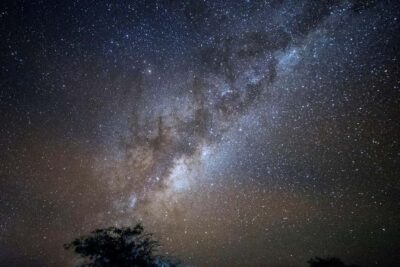
The Roofless Experience San Pedro de Atacama Stargazing Tour
Read our review →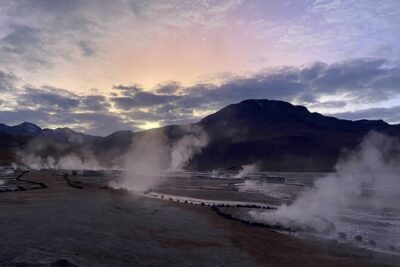
Browse the lists this tour appears in