
Reviewed · PUCON TOURS
Pucón: Villarrica Volcano Climb
The crater is worth every hard step. This 9-hour climb takes you from Pucón to the summit of Villarrica, one of Chile’s most iconic active volcanoes, with trained guides, glacier equipment, and a thrilling snow slide back down. I especially like the small guide ratio of one guide for every three participants and the way the day includes both practical mountain skills and conversation about volcanology and Andean culture.
I also like that Zenit Travel provides nearly all the serious equipment you need, including boots, crampons, an ice axe, helmet, jacket, trousers, gloves, and gaiters. The main drawback is simple: this is much harder than a casual day hike, and the summit is never guaranteed because wind, weather, and volcanic activity control the schedule.
In This Review
- Key points before you book
- Why Villarrica is such a memorable climb
- The day before: fitting boots and learning the plan
- The 6:00 am start from central Pucón
- The first 1,200 metres: a steady uphill start
- Crampons, ice axes, and the snow approach
- The summit at 2,847 metres
- The descent: where the day gets playful
- Guide quality and group care
- Is $190 good value?
- What to bring and how to prepare
- Who should book this climb?
- FAQ
- How long does the Villarrica Volcano climb take?
- Where do I meet the group?
- Do I need previous climbing experience?
- What mountain equipment is provided?
- Is the ski lift included?
- Can weather or volcanic activity cancel the summit?
- Should you book it?
Key points before you book
- Reach 2,847 metres at an active crater: You may see fumaroles and, in suitable conditions, even lava.
- Expect five to six hours uphill: The route is steep and has few truly flat sections.
- Slide part of the way down: Controlled snow sliding is one of the day’s most enjoyable features.
- Meet the company twice: You visit the Pucón office the day before for equipment fitting, then return early the next morning.
- Bring your own fuel: Food, drinks, sunscreen, sunglasses, and personal trekking clothes are not included.
- Ask about the ski lift: The approach lift costs extra and may save energy, but it is not included in the price.
Why Villarrica is such a memorable climb
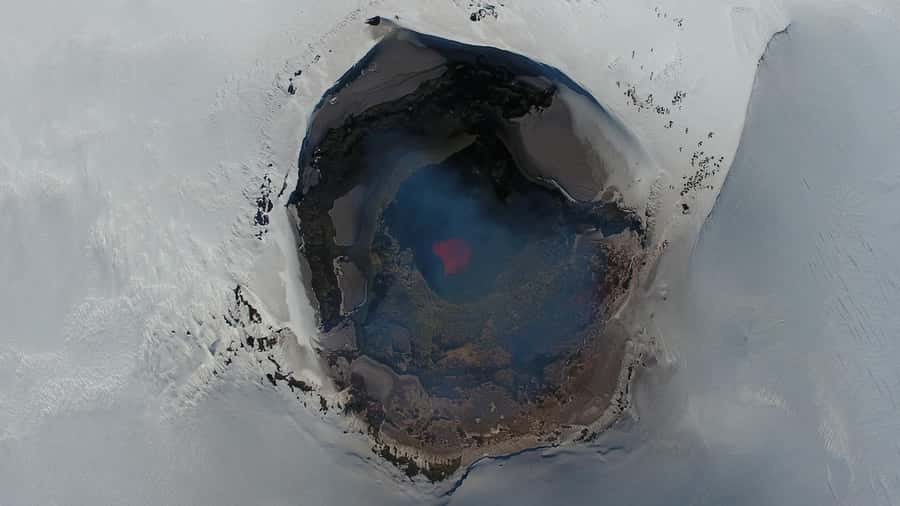
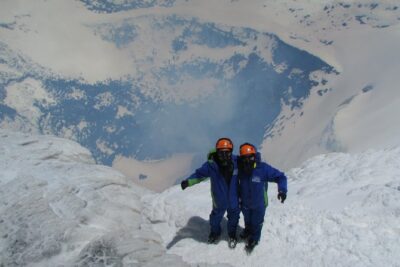
Villarrica is not just a high mountain with a good view. It is an active volcano in Chile’s section of the Pacific Ring of Fire, and the summit gives you a direct look into its crater. At the top, you may see steaming fumaroles and possibly lava, depending on conditions and the current volcanic activity.
That makes the climb feel different from an ordinary summit walk. You are not simply reaching a viewpoint. You are walking toward a live geological system, with the guides explaining how the volcano behaves and why access can change from one day to the next.
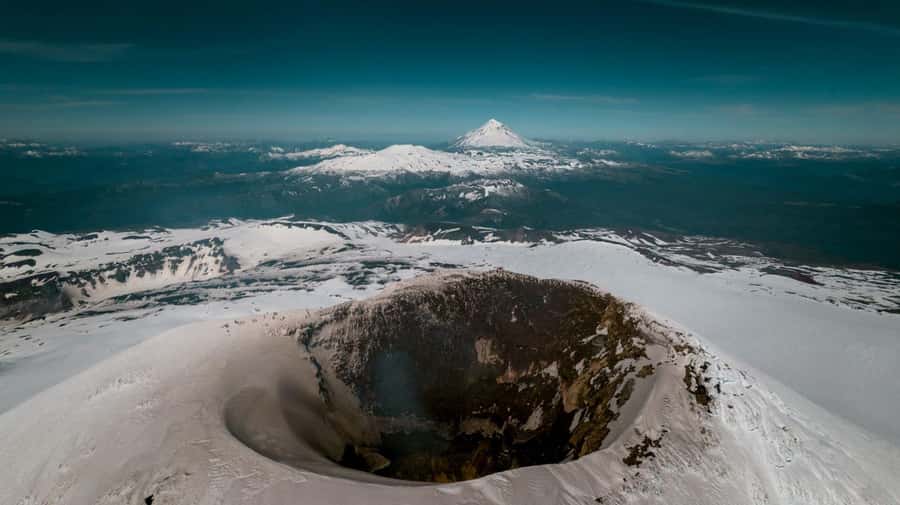
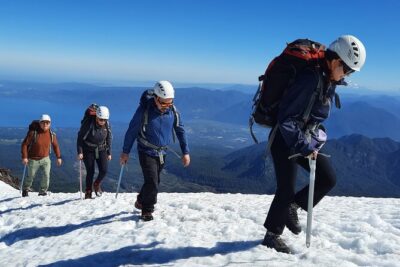
The summit sits at 2,847 metres. From there, you can look across forests, lagoons, and other volcanoes in every direction. The views are a major reward, but the route itself is part of the appeal. You start on a traditional hiking trail, then move onto snow and ice, put on crampons, and use an ice axe under the guidance of the mountain team.
A few more Pucon trips worth comparing side by side
- Villarrica Volcano ascent
★ 5.0 · 430 reviews - Guided Ascent to the Villarrica Volcano from Pucón
★ 5.0 · 220 reviews - Villarrica Volcano Ascent – Zenit
★ 5.0 · 111 reviews
The day before: fitting boots and learning the plan
The first practical step happens before the climb. You meet Zenit Travel at its Pucón office for an equipment check and a short explanation of the route. This is not a formality to rush through. Use the appointment to make sure the boots fit properly, since poor footwear can turn a demanding day into a painful one.
One participant developed blisters from the supplied boots, so take the fitting seriously. Walk around in them, check that your toes have room, and tell the staff about any pressure points. It is also sensible to confirm which clothing items you will receive and what you must bring yourself.
The equipment supplied includes mountain boots, poles, crampons, an ice axe, helmet, backpack, trousers, jacket, gloves, and gaiters. You still need trekking clothes, food, drinks, sunglasses, and sunscreen. A buff is a useful extra, especially for wind, sun, cold air, and volcanic gases near the rim.
The ski lift is another point to clarify at this meeting. A lift can carry you through the lower approach and conserve energy for the steeper snow section. It costs extra, is not included in the $190 price, and you may need cash. The lift option and payment details were not always explained clearly, so ask before the morning departure.
The 6:00 am start from central Pucón
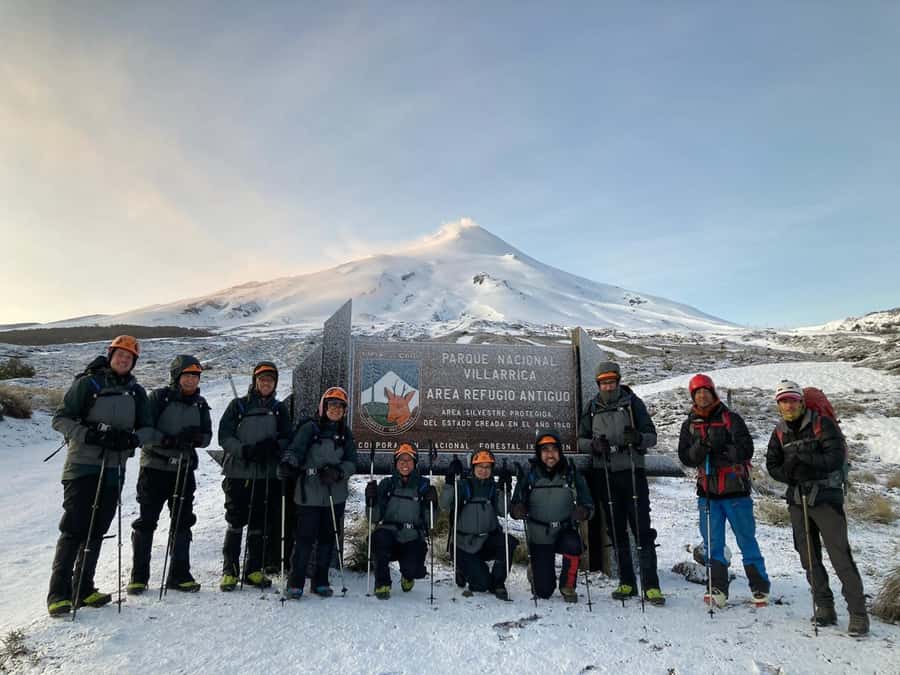
The meeting point is Pedro de Valdivia 205, at the Zenit Travel office under the arch. The supplied meeting details mention both a 6:00 am meeting and arrival at 6:15 am, so confirm the exact time with the company the day before. In either case, this is an early start.
The van ride to Villarrica National Park takes about 30 minutes. Transportation from the central office and the national park entrance fee are included, so you do not need to arrange a separate taxi or park ticket.
An early departure has two benefits. It gives you the best chance of using the available climbing window, and you may catch sunrise colors over the surrounding mountains. It can also help you avoid some of the congestion that develops when several climbing groups begin at the same time.
That said, group size affects the pace. The company aims for one certified guide per three participants, but larger combined groups can still form. One group of 12 found itself waiting behind other climbers at several points. If you prefer a steady, quick ascent, ask whether the group can be divided by speed and whether an earlier departure is possible.
The first 1,200 metres: a steady uphill start
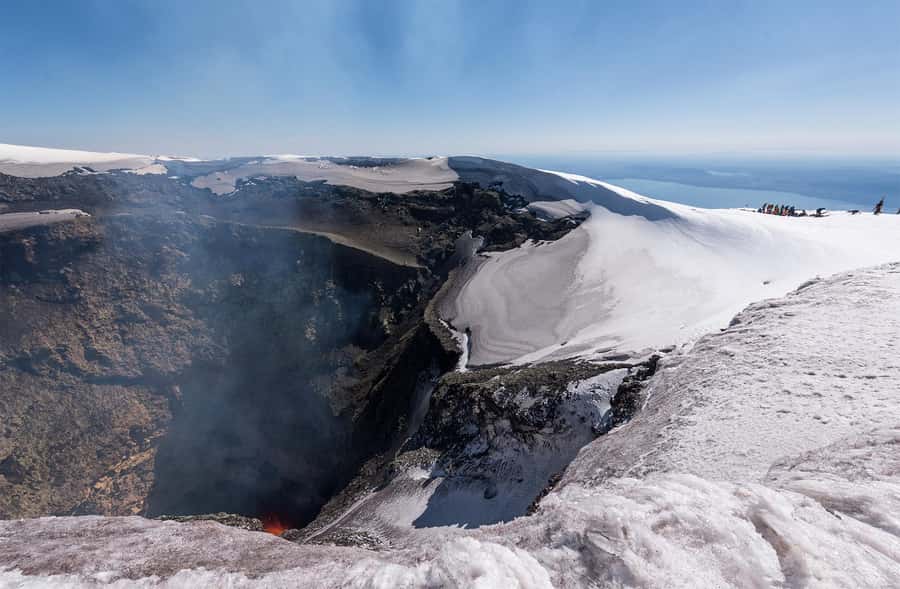
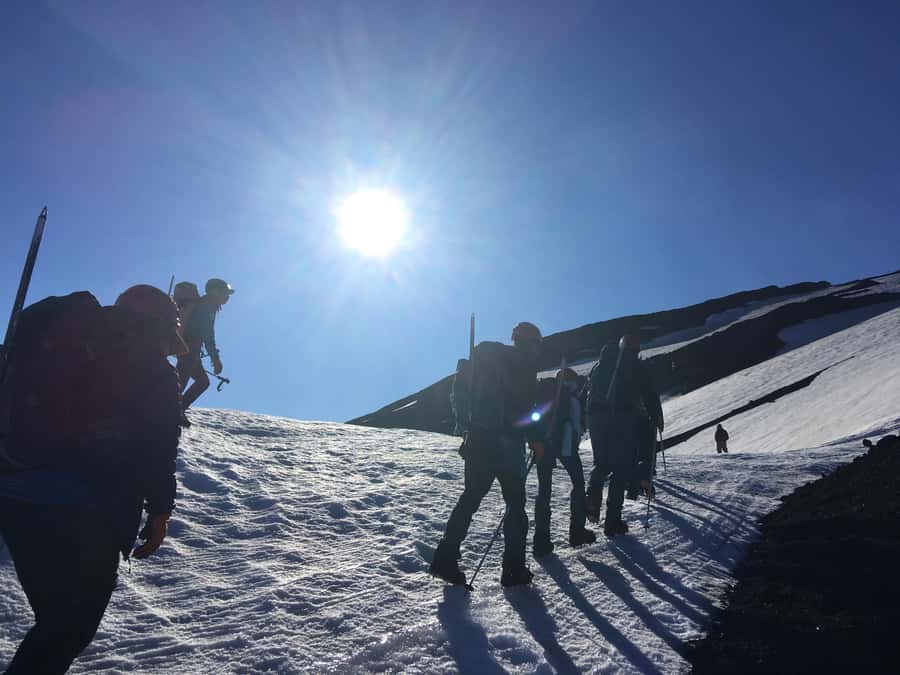
The climb begins at about 1,200 metres above sea level. The lower section feels like a conventional mountain hike, though you should not mistake that for an easy warm-up. The ascent continues for hours, and there are few level stretches where your legs can fully relax.
The guiding approach is to begin slowly and let your body settle into the altitude. That is good advice. Start with controlled steps, drink regularly, and avoid trying to match the fastest person in the group. Several guides use radios to keep in touch, which helps the team manage different speeds while keeping everyone accounted for.
This is also when the guide talks about the Andes, local Indigenous peoples, and their relationship with the mountains. Those conversations add meaning to the climb without turning it into a classroom. You get useful context while your attention remains on breathing, footing, and the next section of trail.
Your physical condition matters more than technical climbing experience. The ascent does not require previous mountaineering experience, but you need a basic level of fitness and enough endurance for a long, continuous uphill effort. A fit young person may find it manageable, but even athletic participants have found the climb tougher than expected.
Still Chile, but an entirely different landscape:
- Villarrica Volcano Ascent
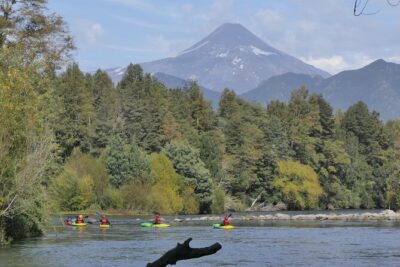
★ 5.0 · 99 reviews - Guided Kayak Trip on Liucura River
★ 5.0 · 87 reviews - Full Day Mountaineering to Villarrica Volcano from Pucón
★ 5.0 · 62 reviews - Horseback Trailride Excursion
★ 5.0 · 48 reviews
Crampons, ice axes, and the snow approach
As you near the summit glacier, the character of the climb changes. The guides explain how to use crampons and ice axes, then help you move across the snow safely. This is one of the best parts of the day for anyone who has never used glacier equipment before.
Crampons give your boots traction, but they do not make the slope flat or effortless. You still need to place your feet carefully and keep a steady rhythm. The ice axe is a safety tool as well as a walking aid, and the guide’s instructions matter. Follow the technique shown to you instead of copying another group.
Conditions can alter how this section is handled. One participant noted that guides sometimes chose to move without crampons on a particular icy section because it was faster in that situation. That is not a general instruction for you to ignore your equipment. Listen to the guides, since they assess the surface and the group in real time.
The climb can feel exposed and tiring, especially as you gain height. Keep your water and snacks easy to reach, and adjust your layers as your body warms up. The weather may change quickly between the lower slopes and the summit, so bring clothing that lets you add or remove insulation.
The summit at 2,847 metres
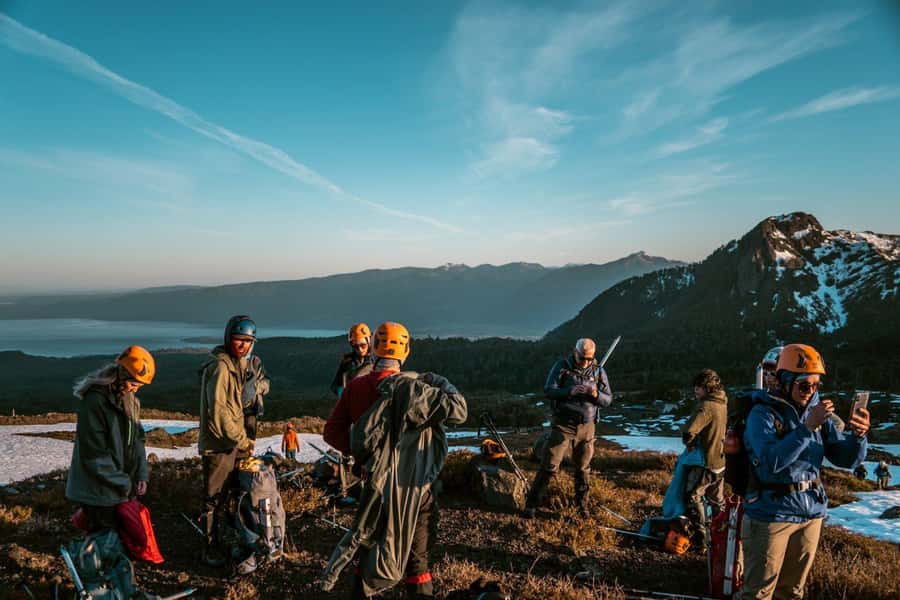
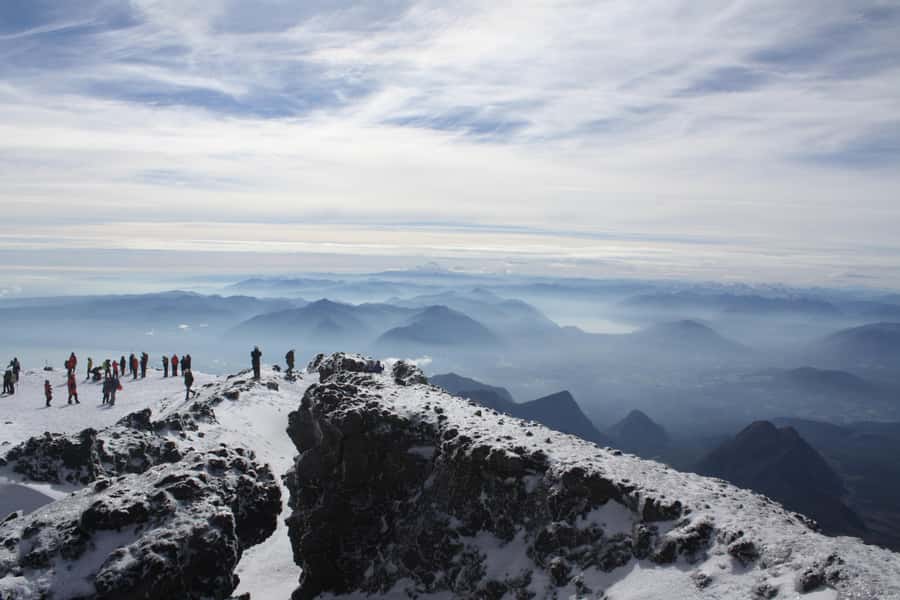
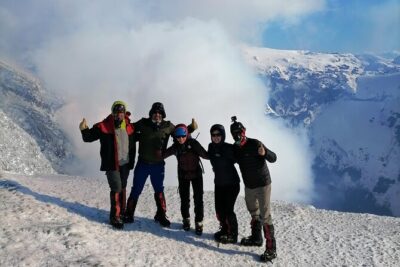
After roughly five to six hours of climbing, you reach the summit area at 2,847 metres. The guide normally allows about 30 minutes at the top. That is enough time to look into the crater, take photographs, enjoy the views, and catch your breath, but it is not a long picnic break.
The crater is the main prize. Fumaroles may release visible gases, and there may even be a glimpse of lava. Conditions and volcanic monitoring determine how close you can go and whether the summit itself is open. A gas mask may be useful around volcanic gases, and one group was equipped with one, but confirm exactly what your departure-day kit includes.
The 360-degree view reaches across volcanoes, lagoons, and forests. On a clear day, it is the kind of panorama that makes the slow uphill work feel worthwhile. On a cloudy day, the summit can be far less rewarding. One group completed a good climb but had very limited visibility and could not enjoy the snow sliding because of poor weather.
Do not judge the trip only by the summit photograph. Some departures have stopped below the crater because of strong wind or volcanic activity. The guides have also offered alternative plans when Villarrica was closed. Safety decisions are part of climbing an active volcano, not a sign that the company has failed to deliver.
The descent: where the day gets playful
The way down usually takes about half the time of the ascent. The first part involves normal walking, but snow conditions may allow controlled sliding on your bottom down prepared or suitable sections of the slope.
This is not a passive ride. The guides explain how to control your speed and stop, and you need to follow those instructions. You may get wet and cold, so keep a spare layer or waterproof protection in your pack if you have room.
The sliding is often the most fun part of the day. It also gives your legs a break after hours of climbing and can be easier on tired knees than walking downhill. Still, it is not for everyone. If you dislike sliding on snow or feel uncomfortable with the technique, tell the guide and descend at a walking pace.
The descent can be quick, but do not expect a smooth amusement-park ride. Snow texture, slope angle, weather, and volcanic conditions all affect how much sliding is possible. When wind or poor visibility changes the plan, you may walk more of the route instead.
Guide quality and group care
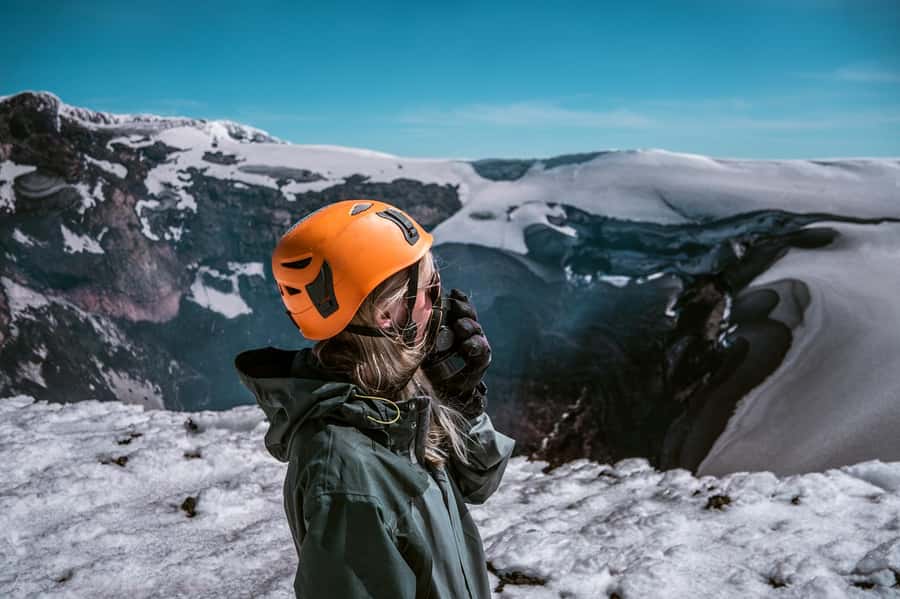
The guides receive the strongest praise for good reason. The team has been described as patient, friendly, clear with instructions, and attentive to individual fitness levels. Guides such as Nacho, Osiel, Chacha, Sebastian, Raul, Luisa, and Felipe are singled out for helping people feel safe and supported.
That support matters on a climb with such a wide range of abilities. Groups may split into smaller units according to speed, while the guides stay in contact by radio. Slower climbers are given breaks rather than pushed beyond their limits, and faster participants may move ahead with another guide.
English is available, and communication has generally been clear. The team mixes safety instructions with humor and conversation, which helps during the long uphill hours. You are still responsible for telling the guide when you need water, a rest, or a boot adjustment. Good support works best when you speak up early.
The main weakness is not the guides themselves but the possibility of a large combined group. A dozen people moving together can create a slow, stop-start rhythm. Ask about likely group size and pace if that matters to you.
Is $190 good value?
At $190 per person, the price is reasonable for a guided high-altitude ascent with technical equipment. You receive transport from the central office, national park entry, a certified guide for every three participants, and the main mountain kit. Buying or renting boots, crampons, an ice axe, helmet, gaiters, and suitable outer layers separately could quickly narrow the price difference.
The value is strongest if you are visiting Pucón without your own mountaineering equipment. You also benefit from local guides who monitor the volcano and decide how to handle changing snow, wind, and volcanic conditions.
The price does not cover food, drinks, sunscreen, sunglasses, trekking clothes, or the optional ski lift. These extras are easy to overlook when comparing prices. Budget for your own breakfast and lunch, and ask about lift fees before you arrive.
The company offers free cancellation up to 24 hours in advance and lets you reserve before paying. Those terms are useful because the weather and volcano status can change. Still, check the latest conditions and the exact cancellation terms when booking.
What to bring and how to prepare
The night before, eat a carbohydrate-heavy meal such as pasta and drink plenty of water. Avoid alcohol, since dehydration will make the ascent harder. Do not arrive at the office assuming the supplied jacket and trousers remove the need for your own base layers.
Pack:
- Water and food for the full day
- Sunscreen and sunglasses
- Trekking clothes and warm layers
- A buff or neck covering
- Personal medication
- A small camera or phone, if you can protect it from snow and moisture
Wear the supplied boots during the fitting and report discomfort straight away. Make sure your pack is comfortable and that you understand how to use the poles, crampons, and ice axe before leaving the office.
Children under 18 cannot join this activity. The best fit is an adult with reasonable fitness, a willingness to climb continuously for several hours, and enough flexibility to accept a changed route or an unsuccessful summit attempt.
Who should book this climb?
I would choose this climb if you want an active day with a real sense of achievement, not a gentle sightseeing outing. You get technical equipment, excellent guide support, a volcanic crater, wide mountain views, and a memorable descent on snow.
I would think twice if you dislike steep uphill walking, have not exercised regularly, or want a guaranteed summit and clear view. The route is demanding, the weather can stop the climb, and strong winds have forced early turnarounds.
The most important question is not simply Can I hike for nine hours? Ask yourself if you can keep going uphill for five or six hours, manage changing temperatures, and remain calm if the guide changes the plan for safety. If the answer is yes, Villarrica can be one of the best days you spend in Pucón.
FAQ
How long does the Villarrica Volcano climb take?
The full activity lasts about nine hours. This includes two 30-minute van rides and roughly 8.5 hours in Villarrica National Park for the hike and summit attempt.
Where do I meet the group?
Meet at Pedro de Valdivia 205 in central Pucón. Look for the Zenit Travel office under the arch. The supplied details mention both 6:00 am and 6:15 am, so confirm the precise arrival time the day before.
Do I need previous climbing experience?
No previous climbing experience is required. You do need a minimum level of physical fitness because the ascent takes about five to six hours and includes steep snow and glacier sections.
What mountain equipment is provided?
The equipment includes mountain boots, poles, crampons, an ice axe, helmet, backpack, trousers, jacket, gloves, and gaiters. Trekking clothes, sunglasses, sunscreen, food, and drinks are not provided.
Is the ski lift included?
No. The ski resort towing ticket for the lower approach is not included. Ask the company about the lift option and payment method during your equipment fitting, since cash may be needed.
Can weather or volcanic activity cancel the summit?
Yes. The program depends on the day’s weather, wind, and volcanic conditions. The volcano is monitored for seismic activity, and the guides may stop below the crater, change the route, or cancel the ascent when conditions are unsafe.
Should you book it?
Book this Villarrica climb if you want a demanding, well-supported mountain day and understand that the crater is a goal, not a promise. The strongest reasons to choose it are the experienced guide team, generous equipment package, close guide ratio, and the rare chance to walk up an active Chilean volcano and slide partway down.
Before paying, confirm the meeting time, group size, summit status, ski lift details, and equipment fitting. Arrive prepared with food, water, sunscreen, warm layers, and realistic expectations about the effort. For fit adults who accept a little discomfort in exchange for extraordinary views, the $190 price is a fair deal.
Just added around Pucon
- Trekking Huerquehue★ 5.0 · 6 reviews
- Half day Canyoning activity in Pucón★ 5.0 · 20 reviews
- Ascent of the Llaima Volcano★ 5.0 · 4 reviews
- Trekking trhough Lagos Andinos Trail★ 5.0 · 15 reviews
- 2-day guided ascent to Lanin volcano, from Pucón★ 4.5 · 12 reviews
- Guided ascent of Llaima volcano from Pucón★ 5.0 · 18 reviews
- Winter Rafting River Trancura★ 5.0 · 9 reviews
- 2-day Lanin Volcano ascent★ 5.0 · 11 reviews
Pucon Tours, compared.
Guided Ascent to the Villarrica Volcano from Pucón
Read our review →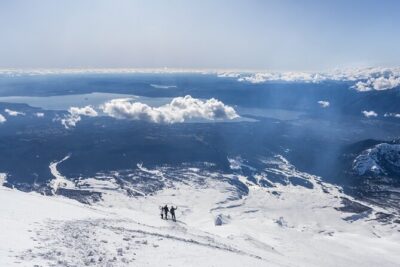
Full Day Mountaineering to Villarrica Volcano from Pucón
Read our review →
Trekking Mirador el volcano + Geometric hot springs
Read our review →Browse the lists this tour appears in