
Reviewed · CABLE CAR RIDES
Tour in Santiago with Pass to Funicular, Cathedral Cable Car and More
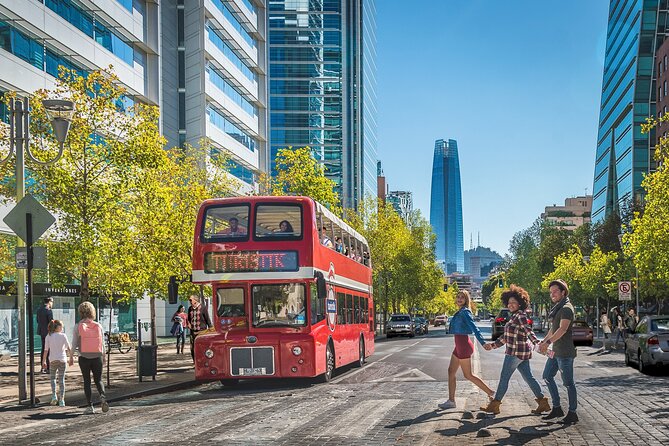
See Santiago from street level to mountaintop. This Turistik experience combines a two-day hop-on hop-off bus pass with one day on the San Cristóbal cable car, funicular, and panoramic buses. I like the easy contrast between modern Santiago, old civic squares, leafy parks, and hilltop views. I also like that the Metropolitan Cathedral tour includes access to its bell tower, a special chance to see the historic center from above.
The main drawback is the spread of the route. Santiago is large, and two hours at every listed stop would require far more time than most people have. You will need to choose carefully, and the cable car, funicular, and cathedral operate on specific schedules. At $81 per person, the package offers good value if you use several included attractions, but it is less appealing if you only want a quick city overview.
In This Review
- Key points to know before booking
- What this Santiago pass actually includes
- Starting at Parque Arauco and modern Las Condes
- Parque Bicentenario and the Alonso de Córdova area
- San Cristóbal Hill by cable car
- Riding the historic funicular to Bellavista
- Plaza de Armas and Santiago’s oldest center
- The Metropolitan Cathedral tower visit
- La Moneda and the Civic Quarter
- Cerro Santa Lucía and the Lastarria area
- Providencia, Balmaceda Park, and Barrio Italia
- El Golf and Santiago’s polished modern side
- How to get the best value from $81
- Who should book this experience
- Should you book the Santiago pass?
- FAQ
- How long does the Santiago experience last?
- What is included in the $81 price?
- Is lunch included?
- Where does the activity start?
- What time does the activity start?
- Is the Metropolitan Cathedral tour offered every day?
- How long is the cathedral visit?
- Is accident insurance included?
Key points to know before booking
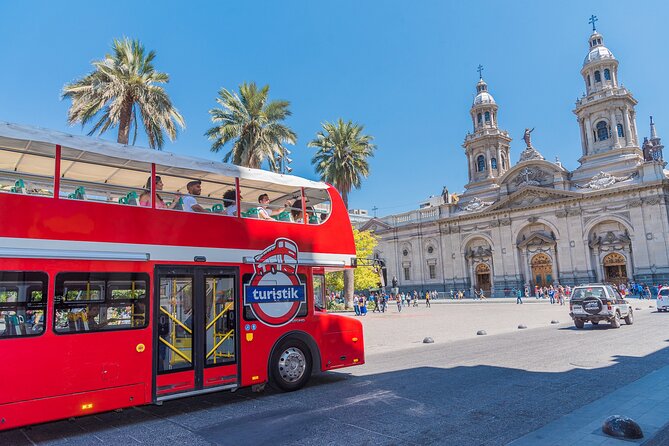
- One pass covers several kinds of transport: You get unlimited hop-on hop-off bus travel for two days, plus one day on the cable car, funicular, and panoramic buses.
- The cathedral tower tour is the unusual extra: The 35-minute visit includes the bell tower and a 360-degree view over central Santiago.
- San Cristóbal Hill is the visual highlight: The cable car reaches the summit, where you can visit Bellavista Terrace and the Sanctuary of the Virgin.
- The route links old and new Santiago: Plaza de Armas and La Moneda sit alongside Costanera Center, El Golf, and the upscale Alonso de Córdova area.
- Parks provide welcome breathing room: Parque Bicentenario, Parque Araucano, Balmaceda Park, and Cerro Santa Lucía break up the city sightseeing.
- The schedule needs planning: Cathedral visits are offered Tuesday through Saturday at set times, while the cable car and funicular connections work best when you allow extra time.
What this Santiago pass actually includes
This is not one nonstop guided bus tour lasting three days. It is a flexible sightseeing package built around several transport and admission tickets.
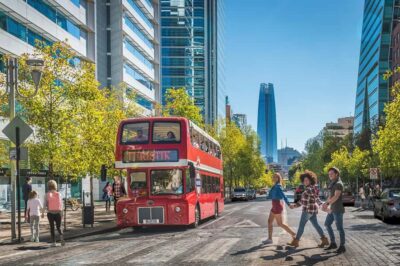
You receive unlimited hop-on hop-off bus service for two days. You can get off at major sights, spend time there, then board a later bus and continue the route. The package also includes one day of travel on the Santiago Cable Car, Funicular, and panoramic buses inside or around San Cristóbal Hill.
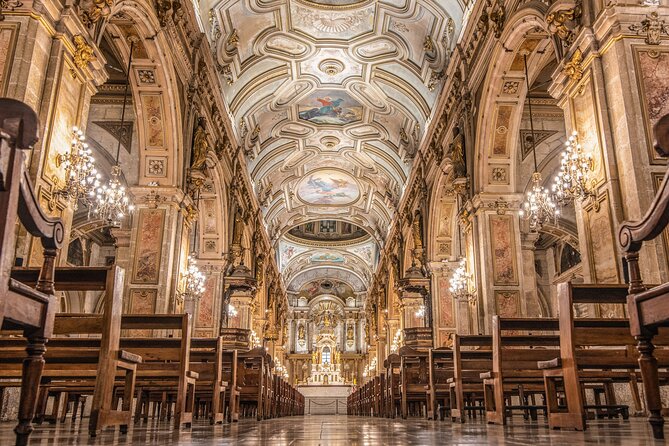
The third element is a guided tour of the Metropolitan Cathedral. That visit lasts about 35 minutes and includes the unusual chance to climb the bell tower. A free map is included, which matters here because the route covers several separate parts of Santiago.
The listed duration is approximately three days, though your exact use depends on how you arrange the tickets. The meeting point is at Av. Pdte. Kennedy Lateral 5059 in Las Condes, with a 9:30 a.m. start. The activity ends back at the meeting point.
More cable car and funicular rides:
- Cable Car, Funicular and Sightseeing Bus in Santiago one day
★ 5.0 · 2,325 reviews - Cable Car, Funicular and Sightseeing Bus in Santiago two days
★ 5.0 · 1,747 reviews - Santiago: 1-Day Hop-On Hop-Off Bus and Cable Car Ticket
★ 4.3 · 332 reviews
Starting at Parque Arauco and modern Las Condes
Parque Arauco is a practical first stop if you want shopping, food, and a smooth introduction to Santiago’s wealthier eastern side. The mall has national and international brands, a Luxury District with names such as Louis Vuitton, Chanel, and Dior, an open-air dining boulevard, a cinema, and a theater.
I would not make the mall the main reason to book this experience. Its value is practical. You can eat, get information at the Turistik center, or use it as a starting point before heading toward the city’s more distinctive sights.
Nearby Parque Araucano gives you a better reason to step off the bus. It is a large green space for walking, a picnic, and a break from shopping. If you are staying in Las Condes, this stop can also help you get your bearings before using the route.
The eastern stops show Santiago’s modern face. Costanera Center is home to the tallest building in Latin America, a 300-meter tower above a major shopping center. The mall has clothing, technology, sports, entertainment, food, a cinema, and Sky Costanera, the paid viewpoint at the top.
Sky Costanera is not included in the package description, so you should treat it as an optional extra rather than part of the $81 price. The bus pass does, however, make it easy to reach the area.
Parque Bicentenario and the Alonso de Córdova area
Parque Bicentenario is one of the better stops for a slower hour or two. The park runs along the south side of the Mapocho River in Vitacura and was designed by architect and landscape designer Teodoro Fernández.
The attractions here are simple but rewarding: paths, statues, play areas, sports spaces, an amphitheater, and two lagoons. You might see black-necked swans, flamingos, herons, and fish around the water.
Mestizo restaurant sits beside the stop. Alonso de Córdova Street is also close, with luxury shops, Chilean design, and upscale restaurants. This is a good place to combine a walk with lunch, though food is not included in the tour.
The advantage of Parque Bicentenario is space. Santiago sightseeing can become a chain of streets, buildings, and traffic. This park gives you open air and room to slow down. The limitation is that it is not a compact historic attraction, so you need to enjoy walking and parks to make the stop worthwhile.
San Cristóbal Hill by cable car
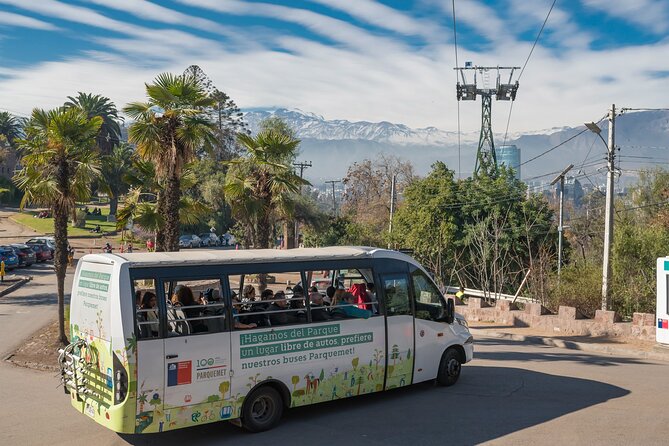
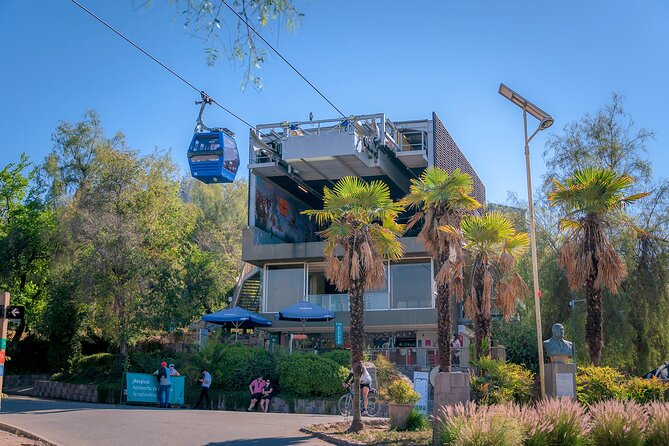
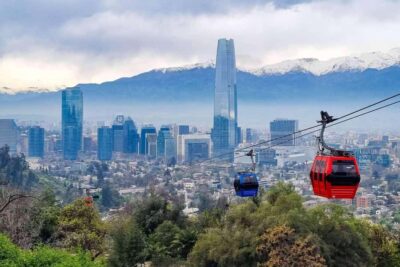
The cable car is the package’s strongest scenic feature. From the Oasis Station, reached through the Pedro de Valdivia access, the route carries you toward the top of San Cristóbal Hill.
At the summit, you can visit Bellavista Terrace and the Sanctuary of the Virgin of the Immaculate Conception. The hill also has viewpoints, squares, the Japanese Garden, and other attractions within Metropolitan Park.
The views are the main reward. From above, Santiago spreads out below the hill, giving you a useful sense of the city’s size and layout. The classic refreshment here is mote con huesillo, a Chilean drink made with wheat and dried peaches. It is a fitting stop after the ride and a local detail that makes the visit feel less like a simple transport connection.
The cable car stop is not directly at the bus stop. You reach the Oasis Station by walking along Avenida Pedro de Valdivia Norte. That short transfer is important to remember, especially if you are trying to meet the cathedral tour later in the day.
This is also the point where the package becomes more than a standard bus loop. You can connect from the summit to the funicular or panoramic buses and continue through San Cristóbal’s green spaces. The cable car and funicular are included for one day, so plan to use both together.
A few more Santiago trips worth comparing side by side
- Valparaiso Port and Viña del Mar with Casablanca Wine Tasting
★ 5.0 · 6,110 reviews - Santiago: Cajon del Maipo/Embalse del Yeso Tour with Picnic
★ 4.3 · 3,789 reviews - Santiago: Vina Del Mar, Valparaiso, Casablanca & Reñaca Tour
★ 4.2 · 2,838 reviews - Small-Group Cajón del Maipo Full-Day Tour and Picnic
★ 4.5 · 2,277 reviews
Riding the historic funicular to Bellavista
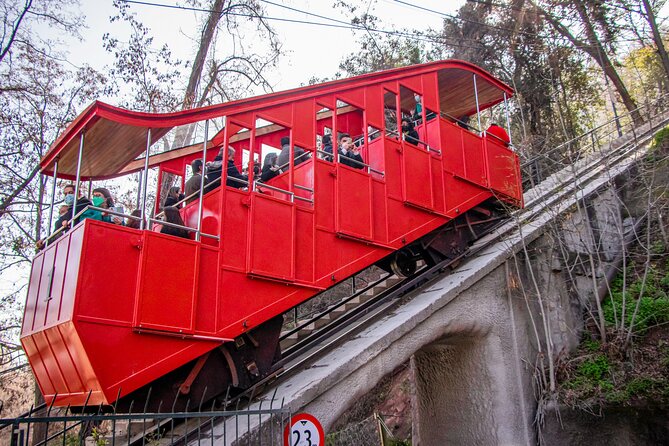
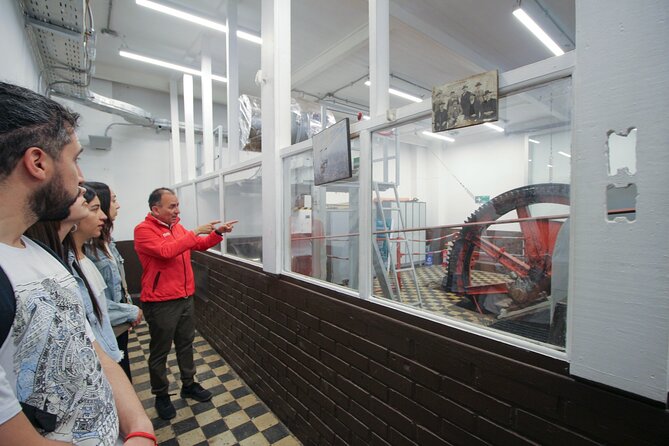
The Santiago Funicular is a heritage ride up Cerro San Cristóbal. It was declared a Historical Monument in 2000 and has neo-Gothic design by architect Luciano Kulczewski. Its restored cars climb from the lower station toward the summit.
There are three useful levels to understand. The intermediate station reaches the National Zoo, and the upper station reaches the summit, Bellavista Terrace, and the sanctuary. The funicular also connects with the cable car and panoramic buses.
I like the way this fits into the day. The cable car gives you a broad aerial view, while the funicular provides a shorter, more historic ride through the hill itself. You are not simply repeating the same attraction twice.
The practical issue is timing. Cable car, funicular, and bus connections can take longer than expected, particularly if you stop at the zoo, Japanese Garden, or viewpoints. Do not schedule the cathedral visit too tightly after San Cristóbal Hill.
Plaza de Armas and Santiago’s oldest center
Plaza de Armas is the heart of old Santiago. Pedro de Valdivia founded it in 1541, and the square became the central point of the Spanish grid plan. It began as a military and strategic space before developing into the city’s administrative, commercial, and social center.
The stop puts you near the Metropolitan Cathedral, Santiago Municipality, Central Post Office, and National Historical Museum. These buildings help you read the city’s past through its civic layout rather than through isolated monuments.
Give yourself time to look around the square before entering the cathedral. This is one of the places where the hop-on format works well, since you can pause for photographs, visit nearby buildings, and continue on foot through the historic center.
The square can feel intense compared with Parque Bicentenario or Cerro Santa Lucía. That contrast is useful. Santiago is not one uniform city, and Plaza de Armas shows its oldest and most public side.
The Metropolitan Cathedral tower visit
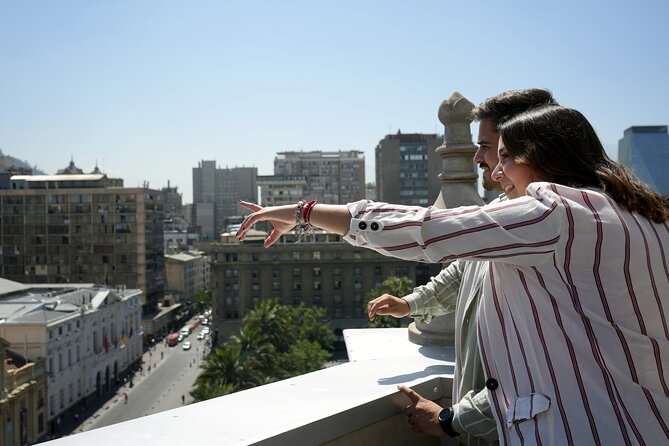
The cathedral tour is a short but distinctive part of the package. It lasts about 35 minutes and includes an exclusive visit focused on the building’s history, followed by access to the bell tower and a 360-degree view of the historic center.
Tours are offered Tuesday through Saturday at 10:30 a.m., 11:30 a.m., 12:30 p.m., 2:30 p.m., and 3:30 p.m. Check the timing carefully when planning your bus route, because a missed time could undermine one of the package’s best extras.
The tower changes the way you see Plaza de Armas. From ground level, the surrounding buildings define the square. From above, you can connect the square to the wider central city. Since the regular bus ticket already brings you to this part of Santiago, the tower visit adds real value to the overall price.
The tour does require you to fit your day around a set departure. That is less flexible than the hop-on bus, but the fixed time also creates a clear anchor for your itinerary.
La Moneda and the Civic Quarter
La Moneda Palace was built between 1784 and 1805 by Italian architect Joaquín Toesca. It was originally constructed as the Royal Mint and now serves as the seat of Chile’s presidency.
The nearby Plaza de la Constitución is surrounded by buildings and monuments connected with the executive branch of the state. Five statues honor Diego Portales, Pedro Aguirre Cerda, Jorge Alessandri, Eduardo Frei Montalva, and Salvador Allende.
The La Moneda stop also brings you close to the La Moneda Cultural Center, which holds art exhibitions. Other nearby points include Santiago Municipality, the Santiago Stock Exchange, Club de la Unión, Universidad de Chile, Paseo Bulnes, and Barrio Dieciocho.
I would pair this stop with Plaza de Armas on the same day. Both areas tell the story of central Santiago, but they do it in different ways. Plaza de Armas is the old colonial core, while La Moneda presents the formal civic center of the modern republic.
Cerro Santa Lucía and the Lastarria area
Cerro Santa Lucía is a small urban hill with a grand architectural entrance. Its neoclassical complex was completed in 1902 and includes curved staircases, pools, a terrace, a triumphal arch, a dome, and a sculpture of Neptune.
The hill has been important since Santiago’s founding, but the architecture you see today reflects the tastes of the city’s upper class in the late 19th and early 20th centuries. It is a compact stop with more visual drama than its size suggests.
From here, you can also reach the National Library, Paris-London neighborhood, San Francisco del Monte Church, Gabriela Mistral Cultural Center, and Lastarria. Lastarria is useful for combining culture, bookstores, art galleries, restaurants, and crafts.
This is one stop where I would avoid rushing. The hill itself involves stairs and an uphill walk, so allow enough time to explore at a comfortable pace. The tour confirms that most people can participate, but it does not include accident insurance, and the hill is not a flat museum visit.
Providencia, Balmaceda Park, and Barrio Italia
Plaza de la Aviación connects you with Providencia and a chain of parks beside the Mapocho River. The square extends Balmaceda Park, created in 1929 as part of the former Japanese Park and designed by Austrian landscape designer Óscar Prager.
The Bicentenario Fountain, opened in 2005 by the Municipality of Providencia, is another local feature. Nearby Balmaceda Park and Uruguay Park create a pleasant route for walking along the river.
Providencia Avenue adds shops, cafés, restaurants, and bars. Barrio Italia is about a 22-minute walk away and is known here for international cuisine. That walking time is useful information: Barrio Italia is reachable, but it is not directly at the stop.
This area makes a good change of pace after central Santiago. You get parks and neighborhood streets instead of major government buildings. If your schedule is tight, choose either the river parks or Barrio Italia rather than trying to force both into a short stop.
El Golf and Santiago’s polished modern side
Barrio El Golf grew around the former Los Leones Golf Club. Its principal street, Isidora Goyenechea, recalls one of the wealthy families connected with the area.
The neighborhood now combines mid-20th-century mansions with office towers, restaurants, museums, and newer commercial buildings. Plaza Perú, the Las Condes Municipal Theater, and the Las Condes Interactive Museum are nearby.
The interactive museum uses audiovisual productions in 3D format and is presented as a family-friendly stop. It may suit you if you want an indoor activity, especially after several hours of walking. The restaurant and café choices also make El Golf useful for a meal break.
This stop overlaps with the modern eastern side seen at Costanera Center and Parque Arauco. The difference is scale. Costanera Center is a giant commercial complex, while El Golf gives you a neighborhood feel with offices, dining, and older residences.
How to get the best value from $81
At $81 per person, the package is easiest to justify when you use the full combination of transport and admissions. The value comes from avoiding separate payment for two days of bus rides, one day of cable car, funicular, and panoramic bus travel, plus the cathedral tower visit.
It is a weaker deal if you plan to ride the bus once, skip San Cristóbal Hill, and only look at the cathedral from the square. In that case, several included elements go unused.
I would divide the experience like this:
- Day one: Use the bus for Parque Arauco, Parque Bicentenario, Costanera Center, and El Golf.
- Day two: Visit Plaza de Armas, the Metropolitan Cathedral, La Moneda, and Cerro Santa Lucía.
- Day three: Use the cable car and funicular together at San Cristóbal Hill, adding the Japanese Garden or other park sights if time permits.
That plan is only a framework. The cathedral’s scheduled visits may require you to shift the central-city day. Start at 9:30 a.m. if you want a full sightseeing day, and leave room between transport connections.
The package is capped at 100 participants. That is not an intimate private tour, but the hop-on format gives you freedom to spread out once you leave the bus.
Who should book this experience
I would recommend it to a first-time visitor who wants a broad introduction to Santiago without arranging each ride separately. It suits you especially well if you want both major city sights and elevated views, and if you like choosing your own pace.
Families may appreciate the parks, funicular, cable car, shopping centers, and 3D museum. Couples may prefer the viewpoints, Lastarria, Parque Bicentenario, and the restaurant areas around El Golf and Alonso de Córdova.
You should think twice if you prefer small-group guiding, long visits at one museum, or a tightly structured historical walk. The bus route is flexible, but the experience asks you to manage your own timing. Lunch, snacks, and accident insurance are not included.
Free cancellation is available up to 24 hours before the start time. Changes or cancellations inside that window are not accepted for a refund.
Should you book the Santiago pass?
Book it if you want transport, major viewpoints, and a useful city framework in one purchase. The cable car, funicular, and cathedral tower make this more worthwhile than a basic bus loop, and the route gives you a fair look at both central Santiago and the modern eastern districts.
Skip it if you already know Santiago, plan to spend most of your time in one neighborhood, or do not want to organize your own stops. For a first visit, though, the combination is sensible. Use the bus for distance, the hill rides for scenery, and the cathedral tower for a short dose of central Santiago’s past.
FAQ
How long does the Santiago experience last?
The experience is listed as approximately three days. The hop-on hop-off ticket is valid for two days, while the cable car, funicular, and panoramic buses are included for one day.
What is included in the $81 price?
The price includes a free map, unlimited hop-on hop-off bus travel for two days, one day of cable car, funicular, and panoramic bus travel, and a tour of the Metropolitan Cathedral.
Is lunch included?
No. Lunch, food, and snacks are not included.
Where does the activity start?
The meeting point is Av. Pdte. Kennedy Lateral 5059, 7560994 Las Condes, Santiago, Chile.
What time does the activity start?
The stated start time is 9:30 a.m.
Is the Metropolitan Cathedral tour offered every day?
No. The cathedral tour is offered Tuesday through Saturday at 10:30 a.m., 11:30 a.m., 12:30 p.m., 2:30 p.m., and 3:30 p.m.
How long is the cathedral visit?
The cathedral tour lasts about 35 minutes and includes a visit to the bell tower with a 360-degree view of central Santiago.
Is accident insurance included?
No. Accident insurance is not included in the activity price.
Just added around Santiago
- Walking City Tour with Funicular, Cable Car and Tasting★ 4.3 · 6 reviews
- Tour VIÑA CONCHA Y TORO + CASA MARQUES – Chile, from Santiago.★ 5.0 · 2 reviews
- VIÑA DEL MAR AND VALPARAISO TOUR★ 4.8 · 20 reviews
- Undurraga Wine tour★ 4.2 · 15 reviews
- Undurraga + Isla Negra + San Afonso del Mar —– Full day★ 4.1 · 8 reviews
- wetravelneruda’s route – Pablo Neruda’s route – Private tour★ 5.0 · 6 reviews
- Southcoast – Private Full-Day tour★ 5.0 · 6 reviews
- Santiago Private walking tour with Lunch★ 5.0 · 5 reviews
Cable Car Rides, compared.

Cable Car, Funicular and Sightseeing Bus in Santiago one day
Read our review →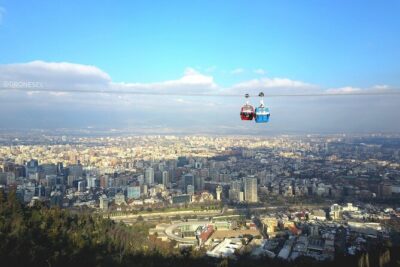
Cable Car, Funicular and Sightseeing Bus in Santiago two days
Read our review →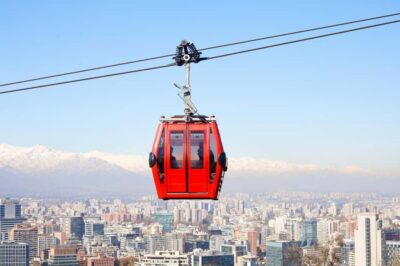
Santiago Skyline: Cable Car & San Cristobal Walking Tour
Read our review →
Valparaiso 4-Hour City Tour by Van and Funicular
Read our review →
Private tour, historic center, high altitude viewpoint, cable car
Read our review →Browse the lists this tour appears in