
Reviewed · PENGUIN TOURS
Full Day on Chiloé Island Visiting Penguins in Puñihuil
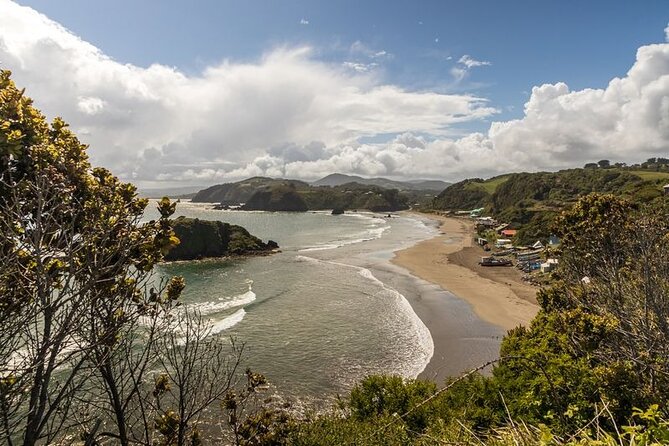
Penguins make the long ride worthwhile. This full-day trip from Puerto Varas combines a Chacao Channel ferry crossing with a boat trip near Puñihuil, where Magellanic and Humboldt penguins share nesting islands. I also like the mix of nature and local stops: Caulín’s coastal bird habitat, Chacao’s wooden buildings, and Ancud’s market and central square.
The main drawback is the day’s pace. You spend many hours on a bus, ferry, and small boat, and the penguin boat and lunch cost extra. Weather matters, too. Rain and rough conditions can make the open boat less pleasant and may reduce the time you enjoy outside.
In This Review
- Key points before you book
- What the $71 price really covers
- Leaving Puerto Varas for the Chacao Channel
- Caulín Beach and the island’s birdlife
- Puñihuil: the day’s main event
- Lunch near Puñihuil, with an important extra cost
- Ancud’s square, market, and extra stops
- The return journey and the group experience
- How weather changes the day
- Who should book this Chiloé day trip?
- Should you book the Puñihuil penguin tour?
- FAQ
- Where does the tour start?
- How long does the Chiloé tour last?
- Is the penguin boat included in the price?
- Is lunch included?
- Which penguins can you see at Puñihuil?
- Is the tour offered in English?
Key points before you book
- Two penguin species in one place: Puñihuil is known for Magellanic and Humboldt penguins nesting in the same area.
- A real island crossing: The ferry through the Chacao Channel adds sea lions, pelicans, and seabirds to the day.
- The boat costs extra: Bring about CLP 10,000 in cash for the penguin navigation, even though the tour price is $71.
- Plan for a long day: The tour lasts about 8 to 10 hours, with substantial time spent on the road.
- English and Spanish guiding: Guides such as Jenny, Nelly, and Javier have received praise for clear explanations and smooth organization.
- A large shared group: The vehicle and tour can hold up to 40 people, so this is not a quiet private outing.
What the $71 price really covers
At $71 per person, this is a fairly efficient way to reach Chiloé from Puerto Varas. The price includes transportation, hotel pickup in central Puerto Varas, and a guide in English and Spanish. It also covers the ferry crossing to the island, which is a useful part of the trip rather than simply a transfer.
The price does not include lunch or the boat ride to see the penguins. The boat has been quoted at about CLP 10,000, payable in cash, so I would treat that as an essential extra rather than an optional add-on. Lunch is also separate. One common set menu has included chicken, omelet, king crab, or salmon, with wine or juice and canned fruit for dessert. The reported cost was around $20, though the exact amount can change.
That puts the real cost of the day well above the advertised tour price. Still, you are covering a long round trip, a ferry crossing, several stops, and a specialist wildlife excursion. If seeing penguins in the wild is one of your main goals in southern Chile, the total can be good value. If you mainly want a relaxed visit to Chiloé, the hours on the road may feel less appealing.
The tour is often booked well ahead, with an average booking time of about 34 days. That is worth noting if your dates in Puerto Varas are fixed.
More Chiloe Island Trips in Puerto Varas & Puerto Montt
- From Puerto Varas: Chiloe Island Full-day Tour
★ 3.6 · 77 reviews - Chiloe Island – Puñihuil Tour
★ 5.0 · 21 reviews - Full Day Castro & Dalcahue Chiloe Island
★ 4.0 · 7 reviews
Leaving Puerto Varas for the Chacao Channel
Pickup begins around 8:30 a.m. at hotels and lodging in central Puerto Varas. The first road section heads south toward Pargua, where you board the ferry across the Chacao Channel.
The crossing separates mainland Chile from Chiloé Island and takes part of the morning’s two-hour segment. Keep your eyes open on deck. Sea lions, pelicans, and local seabirds may appear around the ferry, though wildlife is never guaranteed. The crossing gives you a pleasant break from the vehicle and offers a first look at the island’s coastal character.
The ferry arrives at the Chacao pier, near a small settlement with wooden houses and a church tradition tied to Chiloé’s famous wooden churches. Several of those churches are recognized as UNESCO World Heritage Sites. The stop is brief, but it introduces a major theme of the island: timber buildings, seafaring communities, and Catholic architecture adapted to local materials.
This part is especially useful if you have not visited Chiloé before. You get a sense of place before the tour moves farther along the coast.
Caulín Beach and the island’s birdlife
After the ferry, the route follows the coast toward Caulín Beach. Caulín is known for oysters and for its marine birdlife, making it a natural pause between the ferry and Puñihuil.
The scheduled stop lasts about an hour. You may find open shops, a café, and a small village church. A nearby area has also provided views of black-necked swans. These details make Caulín more than a quick roadside photo stop, though the number of open businesses can depend on the day.
The coastal route is one of the better parts of the trip for scenery. You see the Pacific side of Chiloé, low settlements, shoreline viewpoints, and working coastal areas. The stop is not a major sightseeing site with a long list of formal attractions. Instead, it gives you a short look at everyday island life and the birds that depend on the shore.
I would keep your expectations modest here. Caulín is a supporting stop, not the star of the day. If you are interested in seafood, birds, and small island communities, you will appreciate it more than someone focused only on penguins.
Puñihuil: the day’s main event
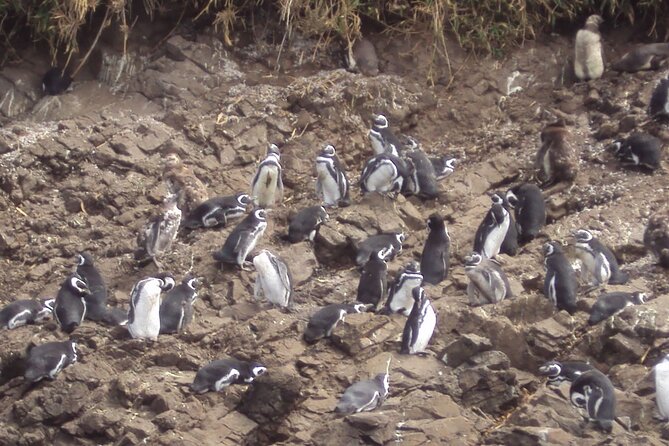
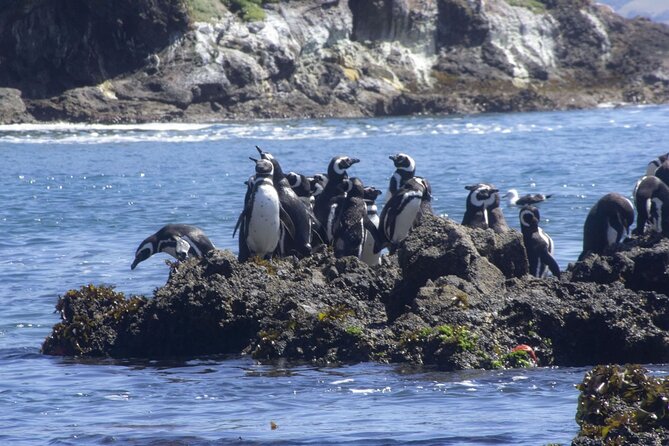
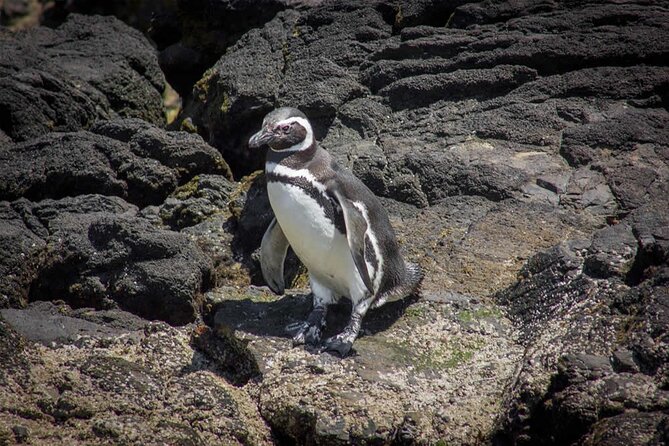
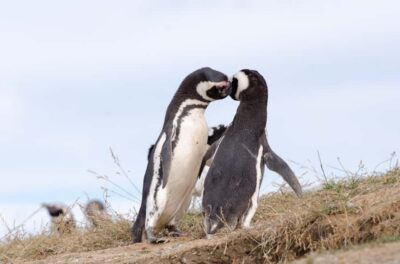
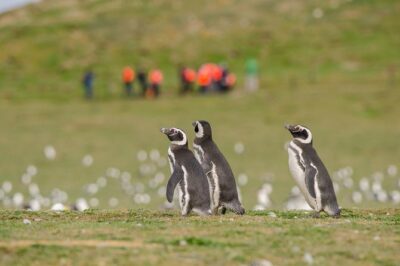
Puñihuil is the reason most people choose this excursion. From the beach, you take a separate boat toward small offshore islands where Magellanic and Humboldt penguins nest in the same area. The site is described as the only place in the world where these two penguin species breed together.
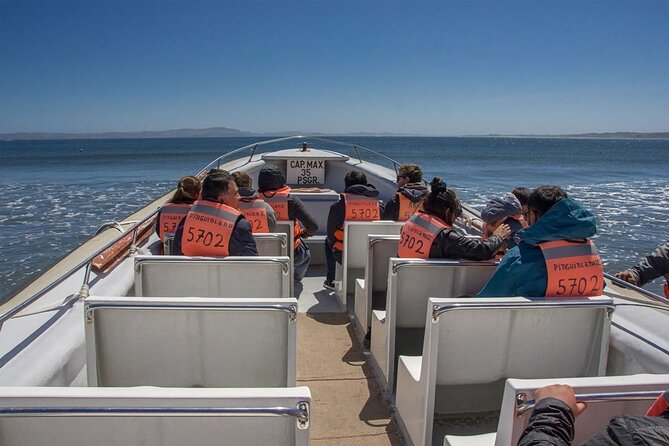
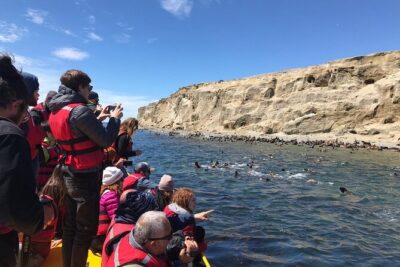
The boat ride usually gives you about an hour near the penguin colonies, although the exact time can depend on weather, sea conditions, and the day’s schedule. You stay on the boat rather than landing on the nesting islands. That protects the birds and keeps the encounter at a suitable distance.
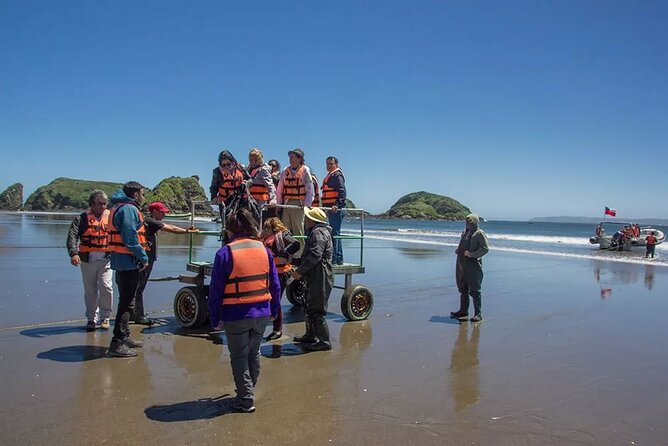
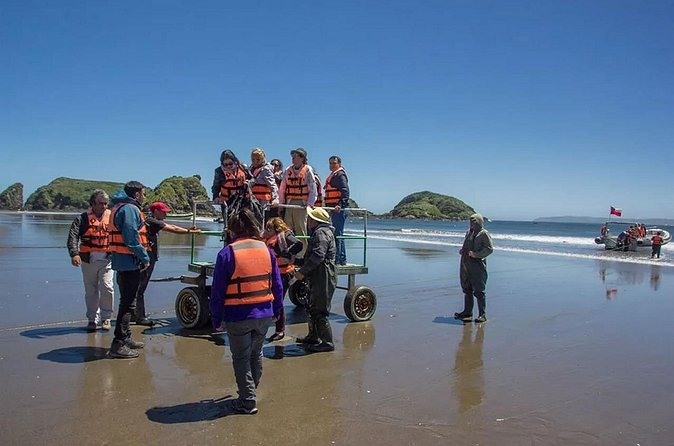
The open boat is exposed to the weather. Operators use an unusual system to move passengers out toward the boats while helping keep them dry, but you should still prepare for wind, spray, and rain. A sunny day can make this section excellent. A wet day can turn the same ride into a cold, cramped experience.
The birds are wild, so sightings vary. Some departures have seen a fair number of both Magellanic and Humboldt penguins. Others have seen fewer penguins, especially outside the strongest part of the season. You may also see ibises, gulls, cormorants, pelicans, and several kinds of ducks.
The boat crew can help point out birds, while the guide explains how the penguins live and why the area supports such a large number of seabirds. The ecological value of Puñihuil has led to its designation as a National Heritage Site.
Bring a camera, but do not expect a zoo-style viewing setup. The boat bobs on the water, and you may need to take photos quickly between waves. I would put binoculars near the top of your packing list if you have them.
Other penguin colony crossings:
- Punta Arenas: Walk with Penguins on Magdalena & Marta Island
★ 4.6 · 611 reviews - Punta Arenas: Full-Day Whales, Penguins, and Glaciers Tour
★ 4.9 · 325 reviews - Punta Arenas: Full Day Tierra del Fuego & King Penguins
★ 4.3 · 179 reviews - Navigation Magdalena Island and Marta
★ 4.0 · 164 reviews
Lunch near Puñihuil, with an important extra cost
Lunch is scheduled around the penguin excursion, but it is not included in the tour price. You may order a set meal at a local restaurant, or bring your own food. There are no dedicated picnic areas, so a packed lunch may mean finding an informal place to sit.
The reported menu has included salmon, king crab, chicken, or an omelet, with wine or juice and canned fruit for dessert. The food has received mixed impressions, so I would see lunch as convenient rather than a major culinary reason to book the tour.
The timing can work in your favor. In some departures, the group places lunch orders before going to the penguins, allowing the meal to be ready afterward. You may be able to pay by cash or card at the restaurant, but cash remains useful for the boat and small stops.
If you have dietary needs, ask the operator when booking. The available information confirms several menu choices, but it does not guarantee a full range of special meals.
Ancud’s square, market, and extra stops
After Puñihuil, the tour continues to Ancud, one of Chiloé’s main towns. The planned visit includes the Plaza de Armas, the central market, and the island’s local church heritage.
The market is a good place to see practical island commerce rather than a polished tourist attraction. You may find food, crafts, and handmade goods. The Plaza de Armas gives you a compact view of the town center, while the market provides more texture through local products and artisan work.
Some guides also include a fort outside Ancud and an additional coastal viewpoint on the return route. Jenny, one of the guides praised for this excursion, was reported to have added both stops. These extras can make the later part of the day more worthwhile, but the exact order and number of stops may vary.
Ancud’s shops and stalls may close early or remain shut on Sundays. If you are hoping to buy crafts, do not count on every shop being open. The town visit is also fairly short, so you will not have time for a full exploration of Ancud.
One reasonable criticism of the route is that it may include two artisan-market stops. I would prefer one longer stop, or two stops featuring clearly different goods. If shopping is not important to you, these pauses may feel like time taken from the town or coastline.
The return journey and the group experience
The return includes the ferry across the Chacao Channel and the road back to Puerto Varas. The full day can run from eight to ten hours, depending on traffic, ferry timing, weather, and the length of each stop.
On a Sunday, lighter traffic may shorten the road sections, but some businesses in Ancud and along the route may be closed. On other days, traffic and ferry schedules can stretch the day. Keep your evening plans flexible.
The group size can reach 40 people. That helps keep the price down, but it affects comfort and timing. One passenger found the rear seat cramped, and a large group naturally means more time loading, unloading, and waiting for everyone to return.
The strongest praise has gone to the guides. Jenny was noted for contacting participants the night before, confirming pickup, warning about the CLP 10,000 boat charge, and explaining each step in both languages. Nelly was praised for keeping a mixed-language group organized and moving on schedule. Javier was described as a good driver.
Those details matter on a day with several transfers. A clear guide can make the difference between a tiring schedule that works and a tiring schedule that feels chaotic.
How weather changes the day
This is a weather-sensitive excursion. The operator requires suitable conditions, and a cancellation caused by poor weather should result in either another date or a full refund.
Even when the tour runs, weather affects the experience. Sunlight improves the ferry crossing, coastal views, and penguin photography. Rain can make the open boat uncomfortable and can shorten the pleasure of outdoor stops. One wet day made the trip feel far less enjoyable, especially because the penguins received only a limited amount of time.
I would check the forecast, but I would not cancel simply because clouds are expected. Chiloé is known for changeable weather, and the wildlife can still be worth seeing in cool or cloudy conditions. Heavy rain and strong wind are more serious concerns.
Wear waterproof outer layers, bring shoes that can handle wet ground, and keep electronics protected. The boat transfer is the one part where a dry bag or waterproof phone pouch earns its space.
Who should book this Chiloé day trip?
I would recommend it most strongly if you have one day available from Puerto Varas and want to see penguins without arranging several separate connections. It suits people who value wildlife, coastal scenery, and a broad first look at Chiloé more than a slow, in-depth town visit.
Families and casual sightseers may appreciate the variety. You get a ferry, villages, birds, a beach, a penguin boat, lunch, and Ancud in one outing. The bilingual guiding also helps if your group includes English and Spanish speakers.
I would think twice if you dislike long drives, crowded vehicles, or fixed group schedules. You should also reconsider if your main goal is to spend several hours quietly watching penguins. The Puñihuil boat portion is the focus, but the whole day includes much more travel than wildlife viewing.
The tour has a 4.4 rating from 13 reviews, with 92 percent recommending it. That matches my reading of the experience: the penguins and guide service are the strongest points, while the length, weather, and extra costs are the main cautions.
Should you book the Puñihuil penguin tour?
Book it if you want a practical, budget-minded introduction to Chiloé and the chance to see Magellanic and Humboldt penguins in the wild. The ferry crossing, coastal birdlife, and Ancud stops give the day useful variety, and a strong guide can keep the long schedule under control.
Skip it if you want a relaxed island day, dislike open boats, or need every major cost included upfront. Before paying, set aside money for the CLP 10,000 penguin boat, budget separately for lunch, and leave your evening free.
Free cancellation is available up to 24 hours before the 8:30 a.m. start time. Changes or cancellations inside that window are not accepted, except when poor weather causes the operator to cancel the trip.
FAQ
Where does the tour start?
Pickup is offered from hotels and lodging in central Puerto Varas. The scheduled start time is 8:30 a.m.
How long does the Chiloé tour last?
The experience lasts approximately 8 to 10 hours, including the road journey, ferry crossings, stops, and penguin boat excursion.
Is the penguin boat included in the price?
No. The navigation to see the penguins is not included. You should plan for about CLP 10,000 in cash for the boat.
Is lunch included?
No. Lunch is not included in the tour price. A set menu may be available near Puñihuil, and you may also bring food, though no picnic areas are set up.
Which penguins can you see at Puñihuil?
Puñihuil is known for Magellanic and Humboldt penguins nesting in the same area. Other seabirds may include pelicans, ibises, gulls, cormorants, and ducks.
Is the tour offered in English?
Yes. Guides provide service in Spanish and English. The tour can have a maximum of 40 travelers.
More Chiloe Island Tours in Puerto Varas
- Puerto Varas; Full day, Chiloe island: Ancud, Caulin and Lacuy
★ 4.5 · 5 reviews - Puerto Montt: Full day Chiloe Island visiting Penguins in Puñihuil
★ 4.0 · 38 reviews - Puerto Montt: Full day Chiloe island visiting Ancud – Caulin – Lacuy
★ 3.5 · 8 reviews - Inner Coast of Chiloé: Road and Sea.
★ 5.0 · 7 reviews
Just added around Puerto Varas
- Puerto Varas: Half day Osorno Volcano tour★ 4.0 · 16 reviews
- Transfer from Puerto Varas to Puerto Montt Airport★ 5.0 · 2 reviews
- Full day Hiking Solitario trail, Osorno Petrohue Falls★ 5.0 · 7 reviews
- Tour Frutillar★ 4.0 · 9 reviews
- Sightseeing Tour in Puerto Varas & Puerto Montt★ 5.0 · 2 reviews
- Puerto Varas: Half day, traditional city tour★ 3.5 · 3 reviews
- Premium Small-Group Half day Tour to Frutillar in Puerto Varas★ 5.0 · 2 reviews
- Petrohue Falls and Osorno Volcano Bike Tour★ 5.0 · 3 reviews
Penguin Tours, compared.
Walk with Penguins on Magdalena & Marta Island
Read our review →
Walk alongside Penguins on Magdalene Island and navigate Marta Island
Read our review →
Shore Excursion: Magellan Penguins Natural Reserve in Magdalena Island from Punta Arenas
Read our review →
Magdalena Island Penguin Tour by Boat from Punta Arenas
Read our review →
Browse the lists this tour appears in