
Reviewed · FOOD & DRINK
Food Tour STGO, Eat like Locals!
Santiago tastes better one market stall at a time. This three-hour food walk links La Vega, old downtown bars, Mercado Central, and Plaza de Armas through about 10 food and drink tastings. You get a useful first look at Chilean cooking, plus a guide who can explain what is on your plate and why locals eat it.
I especially like the stop at La Vega Chica, where market wandering gives way to a proper meal, and the visit to La Piojera for a terremoto, Santiago’s famously potent sweet cocktail. The main caution is that the market food setting may feel rough around the edges, and communication about start times has caused problems for some bookings.
In This Review
- Key things to know before you book
- Why this tour is a smart introduction to Santiago
- Starting at the Fine Arts Museum and entering La Vega
- La Vega Chica gives you a real lunch break
- La Piojera and Santiago’s famous terremoto
- Mercado Central brings architecture into the food walk
- Plaza de Armas, mote con huesillo, and lúcuma ice cream
- Pablo’s guiding style and the safety question
- Timing, meeting point, and cancellation terms
- Who will enjoy this food tour most
- Should you book Food Tour STGO?
- FAQ
- How long does Food Tour STGO last?
- How much does the tour cost?
- How many tastings are included?
- Is this a private tour?
- Where does the tour start?
- Where does the tour end?
- What foods and drinks might I try?
- Is the tour accessible by public transportation?
- What is the cancellation policy?
Key things to know before you book
- Ten tastings in roughly three hours: Expect a broad sampling of Chilean food rather than one long restaurant meal.
- Pablo is the usual guide praised for this experience: He brings local knowledge, humor, food explanations, city history, and even photography skills.
- La Vega Chica adds a sit-down lunch: You can rest, eat traditional dishes, and pair the meal with a local beer.
- La Piojera serves a terremoto: This old bar, founded in 1896, is one of the tour’s most memorable cultural stops.
- The tour ends near Plaza de Armas: You finish downtown, close to the Portal Fernández Concha area and the listed endpoint.
- The setting is genuinely local, not polished: That is part of the appeal, but market crowds, basic food handling, and street conditions may not suit everyone.
Why this tour is a smart introduction to Santiago
At $99 per person, this is not a cheap snack crawl. But the price covers a private experience for your group, several stops, around 10 tastings, a meal-style stop, drinks, and a guide who connects food with the city around you.
I see the value most clearly if this is your first day in Santiago. You get introduced to several central districts without having to decide where to eat, how to order, or which unfamiliar dishes are worth trying. The tour also gives you a starting list of foods to seek out later on your own.
The experience is private, so only your party takes part. That can make a big difference when you have questions, food preferences, or a slower pace. The available feedback also points to small groups at times, including one outing with four people, though the exact group size is not guaranteed.
The tour is not built around luxury dining. It is about markets, ordinary local food, traditional drinks, and downtown places with plenty of character. If you want spotless, carefully designed tasting rooms, this may feel too informal. If you want to see where people shop and eat in central Santiago, the rougher setting is part of the point.
More Santiago food and market trips:
- Valparaiso Port and Viña del Mar with Casablanca Wine Tasting
★ 5.0 · 6,110 reviews - Inca Lagoon in Andes Mountain Range – Visit Local Vineyard with Tasting included
★ 5.0 · 1,897 reviews - Marquis de Casa Concha: Wine tasting in Concha y Toro
★ 5.0 · 1,086 reviews
Starting at the Fine Arts Museum and entering La Vega
The meeting point is outside the National Museum of Fine Arts at José Miguel de la Barra 650. From there, the tour heads toward the city markets, including La Vega Central and La Vega Chica.
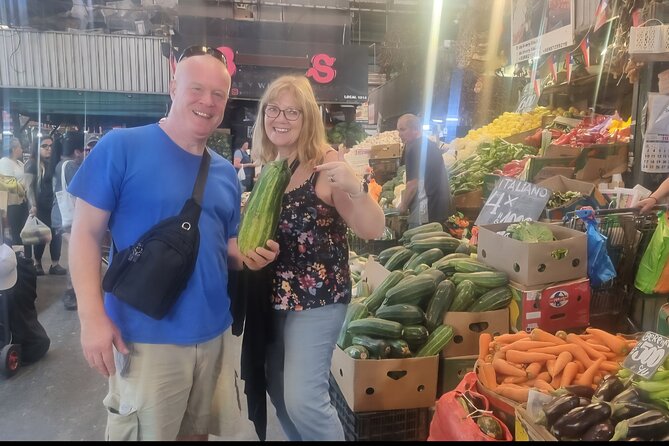
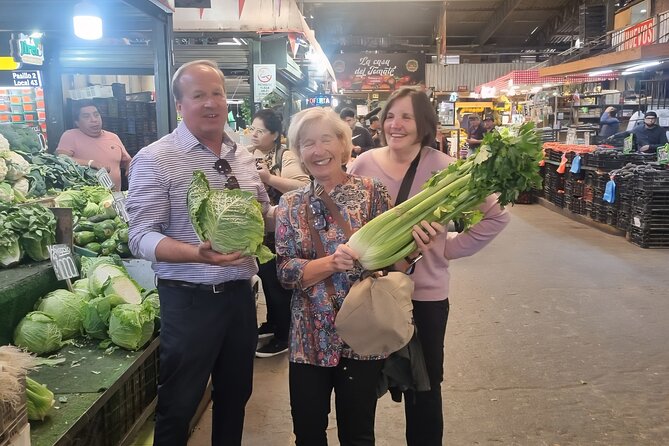
La Vega is one of the best places in Santiago to see daily food life in motion. Stalls sell produce, meat, bread, cheese, fruit, and prepared foods. You are not simply walking past displays for photographs. The goal is to taste items that might otherwise be hard to identify or order on your own.
The food list can include familiar Chilean staples such as empanadas, breads, meats, cheeses, stews, corn, fruits, and spices. The exact tasting order can change, but the experience is designed to cover a wide range of flavors instead of repeating one type of snack.
Pablo receives the strongest praise for making this part engaging. He is described as energetic, funny, and able to explain both the food and Santiago’s past in clear English. He also knows some market vendors personally, which can make the stop feel more like an introduction from a local friend than a standard walk through a market.
You should arrive hungry. Ten tastings sound manageable on paper, but a series of breads, meats, drinks, desserts, and a proper meal can fill you quickly. If you have allergies or strong dislikes, tell the guide early so the tasting choices can be adjusted when possible.
One practical point deserves attention: the market is not a formal restaurant. Conditions can be crowded and basic. A serious complaint described poor sanitation and a glove-handling mistake during food preparation. That account conflicts with several very positive descriptions of the food and care taken by the guide, but it is still useful information. If you are particularly sensitive to open-market food handling, ask exactly which tastings are prepared at the stalls before you commit.
La Vega Chica gives you a real lunch break
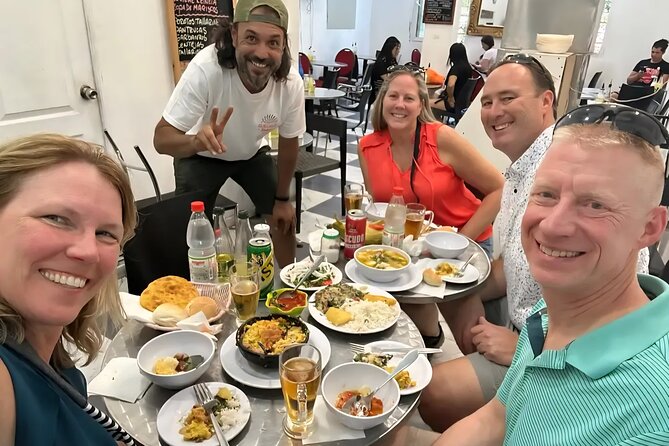
After the market portion, you stop at La Vega Chica for about 40 minutes. This is a welcome change from standing and walking. You sit down for a selection of traditional Chilean dishes made with local ingredients.
The appeal here is not fine presentation. It is the chance to try the sort of food associated with an everyday neighborhood restaurant near the market. The stop may include familiar dishes such as humitas, a corn-based Chilean staple, along with other traditional preparations selected by the guide.
A local beer is also part of the picture. The tour description specifically highlights an ice-cold beer or two, though you should confirm what is included if the exact drink allowance matters to you. The meal is a good place to ask about ingredients, regional habits, and the difference between dishes you may have already encountered in other parts of South America.
This is one of the tour’s strongest features because it gives structure to the day. A market snack can be exciting, but a seated meal lets you slow down and compare flavors. It also helps balance the tour for people who prefer a mixture of street food and restaurant food.
Still, keep your expectations in check. The total duration is only about three hours, and the lunch stop is roughly 40 minutes. You are tasting several foods, not sitting down for a leisurely multi-course meal.
La Piojera and Santiago’s famous terremoto
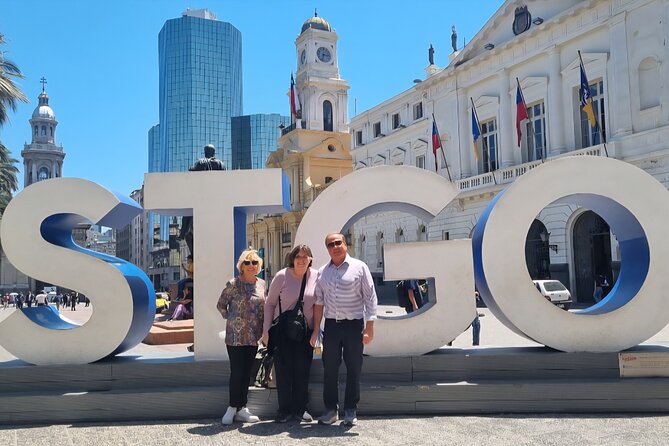
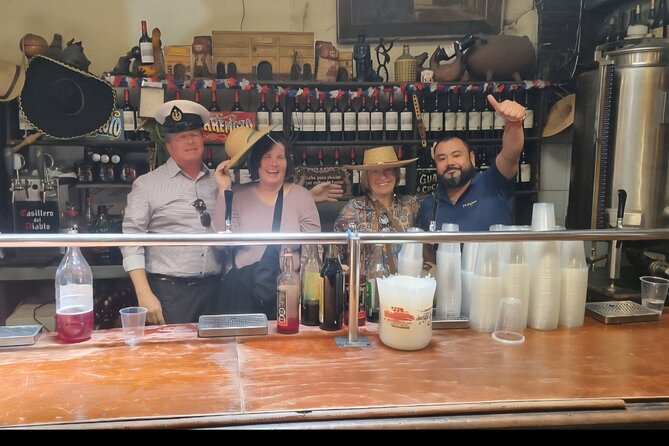
The next stop is La Piojera, an old central bar founded in 1896. It is described as the oldest bar in Santiago, and the setting is a sharp contrast to the market restaurant.
La Piojera is best known for the terremoto, a sweet cocktail made for a strong first impression. The name means earthquake, and the drink has a reputation for being powerful. You may want to treat it as a tasting rather than a challenge, especially since this stop follows several food samples and a beer.
The bar adds an important social side to the tour. Food tours can sometimes become a string of transactions, but a traditional bar shows how Chileans gather, drink, and spend time together. Music, laughter, and an informal atmosphere are part of the stop.
The listed visit lasts around 30 minutes. In practice, the guide may sometimes extend the outing. One account describes an extra stop for a terremoto and ice cream after the planned three hours, but you should not count on additional time. If you have a flight, reservation, or fixed appointment, keep a buffer.
For me, this is the most distinctive drink stop. You can find Chilean food in restaurants around town, but having a guide explain the terremoto inside one of Santiago’s oldest bars gives the drink a stronger sense of place.
A few more Santiago trips worth comparing side by side
- Santiago Half-Day Walking Tour with Hotel Pick up & Food Sample
★ 4.5 · 467 reviews - New Concha y Toro Tour Marques with class, extra tasting y food
★ 4.0 · 329 reviews - Street Food Tour in Santiago with a Local Guide
★ 5.0 · 27 reviews - Santiago: Best Street Food Tour With A Local Guide
★ 4.9 · 7 reviews
Mercado Central brings architecture into the food walk
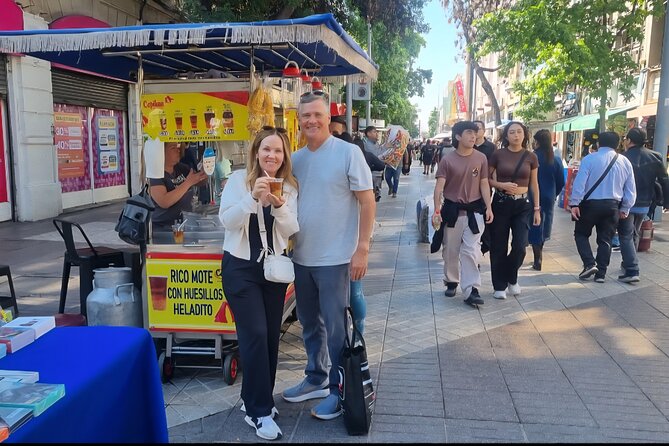
The route also includes Mercado Central, a major downtown landmark housed in an iron structure brought from England in 1872. The market has a water fountain at its center and offers another look at Santiago’s food trade.
This stop is not described as a separate long tasting session. Think of it as a place to walk, look, take photographs, and connect the food with the city’s architecture. It gives the tour a change of pace after La Vega and La Piojera.
Mercado Central can be more visitor-oriented than La Vega, so the two markets serve different purposes. La Vega offers a closer look at ordinary shopping and market stalls. Mercado Central provides a famous central sight with food, historic design, and a more recognizable Santiago setting.
Your guide’s presence matters here. Without context, a market can become a quick photo stop. With explanations about what you are seeing and how it fits into local life, the building becomes part of the food story rather than a detour.
Plaza de Armas, mote con huesillo, and lúcuma ice cream
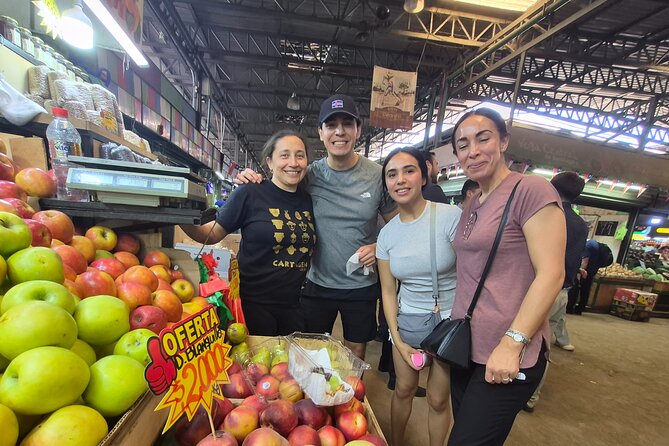
The final food portion leads toward Plaza de Armas, Santiago’s central square. Along the way, you try mote con huesillo, a chilled drink or dessert made with cooked wheat, dried peaches, and sweet syrup.
Mote con huesillo is one of Chile’s signature refreshments. It is filling, sweet, and very different from the usual ice cream or fruit juice stop. The wheat gives it body, while the peach and syrup make it cooling on a warm afternoon.
At Plaza de Armas, the tour adds lúcuma ice cream. Lúcuma is a Chilean fruit with a smooth, caramel-like flavor. It is a useful tasting because it introduces you to a flavor you may not encounter often at home.
The Plaza itself is the heart of central Santiago, so this part works well for orientation. You finish the food experience in a major public space rather than beside an anonymous restaurant. The endpoint is listed at Portal Fernández Concha, at Plaza de Armas 976.
The final stop is a local jewelry gallery selling lapis lazuli pieces. Lapis lazuli is Chile’s national gemstone, and the tour presents this as a place where locals shop, with prices said to be nearly half those in tourist zones or airports.
Treat this as an optional shopping opportunity, not part of the food value. It can be a convenient way to look for a Chilean souvenir, but compare prices and ask about the stone and workmanship before buying. You should never feel pressured to purchase anything.
Pablo’s guiding style and the safety question
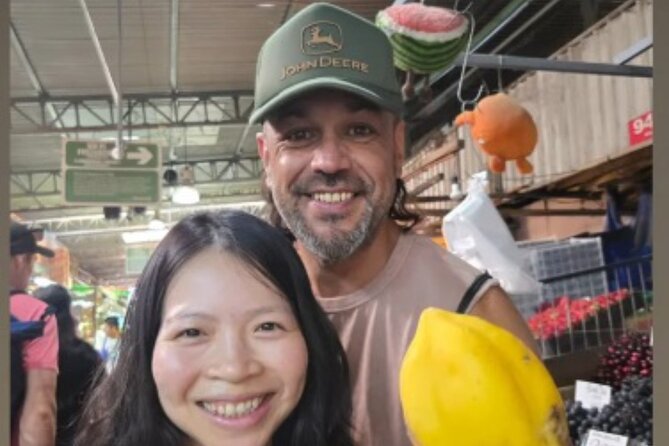
The guide is central to the experience. Pablo is repeatedly praised for his enthusiasm, humor, city knowledge, food knowledge, and care with personal safety. He has also been described as a photographer who takes pictures for the group and sends them through WhatsApp afterward. One party received more than 30 images, which is a thoughtful extra if you like having a record of the day without stopping to take every photograph yourself.
His style appears direct and high-energy. That works well for visitors who want a lively host and plenty of explanation. It may be less comfortable if you prefer a quiet, self-directed tasting.
Safety also comes up in the positive feedback. Pablo is described as watching over the group while moving through busy city areas and markets. That matters in central Santiago, where street conditions can shift quickly between crowded commercial areas and quieter blocks.
There is one serious negative account involving uncomfortable behavior, a sanitation concern, and a disagreement about a refund. I cannot tell you to ignore that. The broad pattern is strongly positive, with a 4.6 rating and 90 percent recommending the experience, but the complaint raises a reasonable question about guide consistency and food handling.
If anything feels wrong during the tour, speak up at once. Also save the operator’s contact details and confirm the meeting time directly before the day of the tour. Several bookings had confusion about whether the start time was 10 a.m., noon, or 2 p.m., and one planned tour did not take place after repeated schedule changes.
Timing, meeting point, and cancellation terms
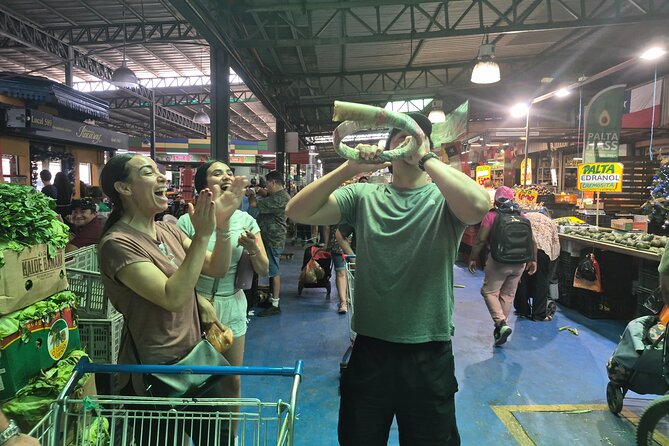
Plan for about three hours, with the possibility that the outing may run longer if the group and guide agree to an extra stop. The start is at the National Museum of Fine Arts, José Miguel de la Barra 650, and the listed finish is Plaza de Armas 976.
The start point is near public transportation. Most people can participate, and service animals are allowed. Because the tour moves through markets and central streets, comfortable walking shoes and a light appetite are sensible, though no special fitness requirement is stated.
You receive confirmation when booking. The cancellation rule is simple: cancel at least 24 hours before the local start time for a full refund. Cancellations or changes inside that window are not accepted for a refund.
The tour is often booked about 28 days ahead. That does not mean you must reserve a month out, but it is a useful signal if your Santiago dates are fixed. Confirm the time before the 24-hour cancellation cutoff, especially if your schedule includes hotel checkout or airport travel.
Who will enjoy this food tour most
I would choose this experience if you want food, city orientation, and local conversation in one short outing. It suits first-time visitors, couples, families, and friends who like trying unfamiliar dishes without spending time researching every stop.
It is also a good fit for photographers. The markets, iron architecture, central square, food stalls, and guide-provided pictures give you plenty to take home besides a full stomach.
You may want another style of tour if you need strict dietary control, polished restaurant conditions, or a tightly managed timetable. The food handling concern, informal markets, possible time changes, and strong guide personality all point to an experience with some unpredictability.
At $99, I would book it for the access and explanation, not simply for the amount of food. You are paying for a local route through several parts of central Santiago, the chance to try dishes you may overlook, and help understanding what you are eating. If you would happily explore markets and bars alone, the price may feel high. If you want a friendly introduction without guesswork, it is easier to justify.
Should you book Food Tour STGO?
I would book this tour for a first or second day in Santiago, provided I confirmed the start time directly and felt comfortable with an informal market-food setting. The strongest reasons are the range of tastings, La Vega Chica lunch, the memorable terremoto at La Piojera, and Pablo’s energetic approach.
I would skip it if sanitation is a major concern, if you need guaranteed schedule precision, or if you dislike direct, high-energy guiding. For everyone else, this offers a useful and flavorful introduction to Santiago, with enough history and local contact to help you eat better for the rest of your visit.
FAQ
How long does Food Tour STGO last?
The tour lasts approximately three hours. It may run longer if the guide adds an extra stop, but extra time is not guaranteed.
How much does the tour cost?
The listed price is $99 per person.
How many tastings are included?
The experience includes about 10 food and drink tastings spread across at least three local spots.
Is this a private tour?
Yes. Only your group participates in the private tour or activity.
Where does the tour start?
It starts at the National Museum of Fine Arts, José Miguel de la Barra 650, Santiago.
Where does the tour end?
The listed endpoint is Plaza de Armas 976, in the Portal Fernández Concha area.
What foods and drinks might I try?
The tour description includes traditional foods such as humitas and sopaipillas, along with mote con huesillo, lúcuma ice cream, local beer, and the terremoto cocktail. The tasting selection may vary.
Is the tour accessible by public transportation?
The meeting area is near public transportation.
What is the cancellation policy?
You can cancel at least 24 hours before the local start time for a full refund. Cancellations or changes made less than 24 hours before the start are not accepted for a refund.
Just added around Santiago
- Walking City Tour with Funicular, Cable Car and Tasting★ 4.3 · 6 reviews
- Tour VIÑA CONCHA Y TORO + CASA MARQUES – Chile, from Santiago.★ 5.0 · 2 reviews
- VIÑA DEL MAR AND VALPARAISO TOUR★ 4.8 · 20 reviews
- Undurraga Wine tour★ 4.2 · 15 reviews
- Undurraga + Isla Negra + San Afonso del Mar —– Full day★ 4.1 · 8 reviews
- wetravelneruda’s route – Pablo Neruda’s route – Private tour★ 5.0 · 6 reviews
- Southcoast – Private Full-Day tour★ 5.0 · 6 reviews
- Santiago Private walking tour with Lunch★ 5.0 · 5 reviews
Food & Drink, compared.

Valparaiso Port and Viña del Mar with Casablanca Wine Tasting
Read our review →
Inca Lagoon in Andes Mountain Range – Visit Local Vineyard with Tasting included
Read our review →
Marquis de Casa Concha: Wine tasting in Concha y Toro
Read our review →
Santiago Half-Day Walking Tour with Hotel Pick up & Food Sample
Read our review →
Concha y Toro Vineyard Tour w/ Transfer & Tasting
Read our review →
Maipo Valley Wine Tasting Tour with 4 Vineyards
Read our review →
New Concha y Toro Tour Marques with class, extra tasting y food
Read our review →Browse the lists this tour appears in