Reviewed · SANTIAGO TOURS
Darwin’s Route: Traversing the Chilean Palm Forest
The wild side of Santiago starts here. This private day hike crosses La Campana National Park, moving from Chilean palm groves to rare oak woodland in a UNESCO Biosphere Reserve. I like the small-group setup and the useful inclusions: hotel pickup, lunch, trekking poles, binoculars, park fees, and a professional guide. The main catch is the effort required: this is a long, demanding walk, not a gentle nature outing.
I also like the route’s sense of place. You follow a historic path associated with Darwin, cross the park from Ocoa toward Olmué, and spend much of the day away from city traffic and crowds. Still, you should bring plenty of water and take the fitness warning seriously. The trail climbs for about three hours, and the full outing takes roughly 10 hours.
In This Review
- Key points about Darwin’s Route
- From Santiago to La Campana National Park
- Walking through the Palmar de Ocoa
- Ocoa Hill pass and the lunch break
- Descending through Santiago oak forest
- What the guide and equipment add
- Is the $221.80 price fair?
- Who should book this hike?
- Final verdict: a strong choice for an active day outside Santiago
- FAQ
- Where does the tour begin?
- Where does the hike finish?
- What time does pickup begin?
- How long does the experience last?
- Is lunch included?
- Is this suitable for children?
- What happens if the weather is poor?
Key points about Darwin’s Route
- A cross-park hike, not a short loop: The route covers about 7 kilometers through the northern Ocoa sector, then another 5.5 kilometers downhill toward Olmué.
- Two rare Chilean habitats: You pass the Palmar de Ocoa, one of only two remaining natural Chilean palm areas in the country, then enter a Santiago oak forest.
- A private outing from Santiago: Pickup and drop-off are offered at any hotel in Santiago, with only your group taking part.
- Useful gear is included: Trekking poles, binoculars, a first aid kit, lunch, park admission, transport, and a guide are part of the price.
- A quiet national park experience: The route can feel remarkably empty, though wildlife sightings, especially birds, are never guaranteed.
- Best for fit hikers aged 13 and up: You need moderate physical fitness, proper clothing, sun protection, and good walking shoes.
From Santiago to La Campana National Park
Your day begins with a 7:30 am pickup from your Santiago hotel. The drive to the park takes about an hour and a half, though traffic can change that. One account of the trip put the drive closer to an hour and 45 minutes each way, so I would keep the day open and avoid scheduling an evening commitment.
The long transfer is part of the trade-off. You are leaving Santiago for the Coastal Mountain Range, not visiting a nearby city park. The reward is a much quieter setting and a full day in central Chile’s Mediterranean climate, with its dry hills, hardy shrubs, palms, and woodland.
Transport is arranged as a comfortable private car rather than a cramped minibus. That matters on a day with a substantial hike at both ends of the drive. You can use the ride to rest, look out at the changing surroundings, and ask questions about the region. The driver on one outing, Felipe, added local conversation and even shared insights about Chilean music during the return journey.
The trip is operated by Coigue Expeditions, and the minimum booking is two people. Since this is a private activity, only your group participates. That gives the day a more personal feel than a large coach excursion, though the $221.80 price per person reflects the private transport, guide, and long operating day.
A few more Santiago trips worth comparing side by side
- Valparaiso Port and Viña del Mar with Casablanca Wine Tasting
★ 5.0 · 6,110 reviews - Santiago: Cajon del Maipo/Embalse del Yeso Tour with Picnic
★ 4.3 · 3,789 reviews - Santiago: Vina Del Mar, Valparaiso, Casablanca & Reñaca Tour
★ 4.2 · 2,838 reviews
Walking through the Palmar de Ocoa
The hike begins in the northern Ocoa sector of La Campana National Park. La Campana was declared a UNESCO Biosphere Reserve in 1985, a useful sign that this is not simply a scenic patch of trees. The park protects a meeting point of several plant communities in one of Chile’s Mediterranean climate zones.
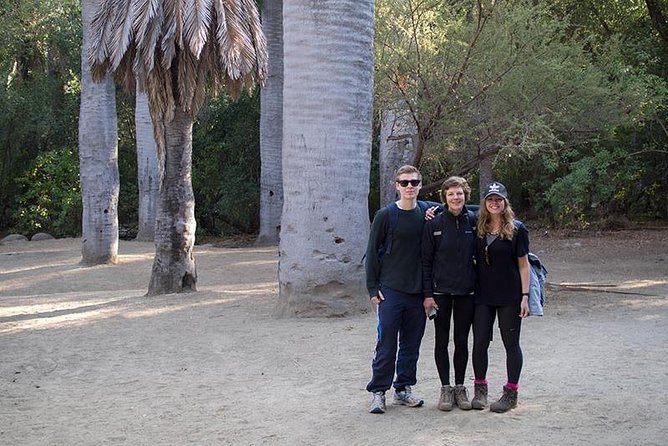
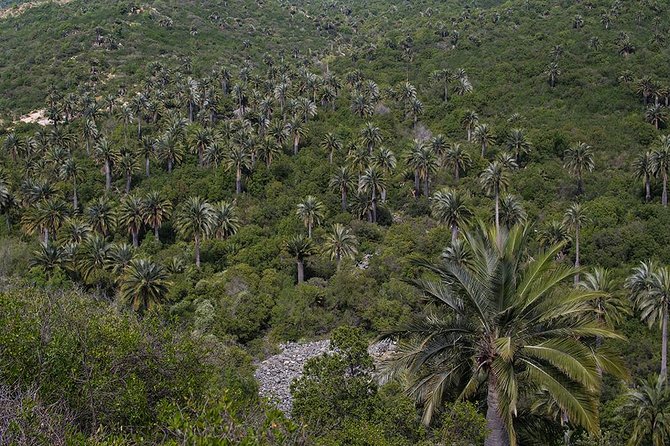
The first section climbs through sclerophyll vegetation. These plants are adapted to dry summers and tend to have small, tough leaves that limit water loss. You will also see Chilean palms, known scientifically as Jubaea chilensis, which give the trail its strongest visual identity.
The Palmar de Ocoa is the highlight of the opening stretch. Chilean palms once covered a much broader area, but natural palm forests are now limited. The Ocoa grove is one of only two remaining natural areas of this kind in the country, so the walk offers more than a pleasant woodland setting. It gives you a close look at a rare part of Chile’s native plant life.
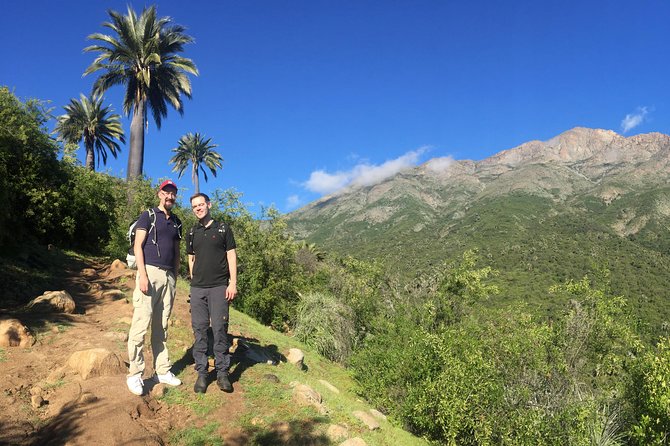
The route rises for about three hours. That time estimate tells you what kind of outing this is. The climb is not a brief uphill stroll before lunch. It is a sustained effort through dry forest and palm country, with the trail gradually taking you higher toward Ocoa Hill pass.
The trail is described as steepish rather than technical, but you should still expect uneven ground and a steady climb. Trekking poles are included, which can help on loose or sloping sections. I would use them from the start rather than waiting until your legs are tired.
Binoculars are also supplied. They may help you scan the trees and open views, but you should keep expectations sensible. Wildlife is not guaranteed, and bird encounters can be limited. The plants and scenery are the dependable part of the day. Animals are a bonus.
Ocoa Hill pass and the lunch break
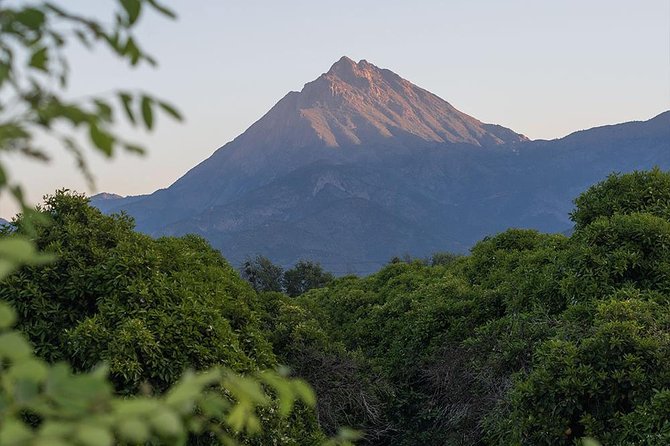
After the climb, the route reaches Ocoa Hill pass. This is the natural rest point, with views across the surrounding mountains and a good place to eat the included box lunch.
Lunch is a practical inclusion rather than a restaurant meal. You should advise the operator about dietary requirements when booking, since the meal is arranged ahead of time. Bring additional water. A previous hiker found the provided arrangements useful but specifically advised carrying extra bottled water, and that is sound advice for a dry, strenuous route.
The pass also gives you a chance to judge the second half of the walk. The route does not simply end at the high point. After lunch, you descend through the southern Cajon Grande sector toward Olmué. Your legs have already worked through the climb, so the downhill may not feel easy, especially on uneven ground.
This pause is one of the reasons the itinerary works well as a full-day nature trip. You get a clear break between the two plant communities, with time to eat and look around instead of rushing through the pass. I would treat it as a proper recovery stop, not just a quick sandwich break.
Descending through Santiago oak forest
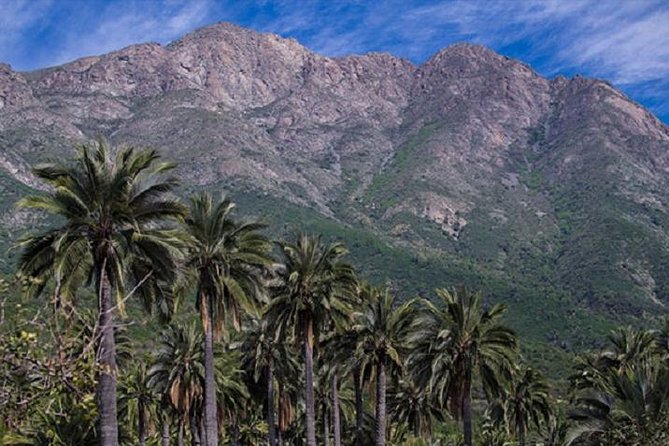
The descent brings a sharp change in scenery. You leave the palm forest and pass through woodland containing Santiago oak, Nothofagus obliqua var. macrocarpa. This is one of the northernmost relict oak populations, making the change in vegetation especially interesting.
The contrast is a major strength of the route. In the morning, you walk through dry sclerophyll growth and Chilean palms. Later, the trail moves into the shade of oak woodland. You are not repeating the same view for 10 hours. The plants, light, and feel of the trail shift as you cross the park.
The southern trail covers about 5.5 kilometers on the descent toward Olmué. The route passes through Cajon Grande before reaching the traditional town. The exact walking time for this section is not specified, and your pace, rest stops, and trail conditions will affect the total.
A driver waits in Olmué for the return journey to Santiago. That arrangement is important. You are not expected to retrace your steps or find your own transport after a long hike. The cross-park design lets you see more of La Campana while keeping the return practical.
The route can be surprisingly quiet. One account described only a brief encounter with a local horse rider and otherwise had the trail largely to itself. That is a strong reason to choose this trip over a standard city excursion, although conditions can vary.
Still Chile, but an entirely different landscape:
- Cable Car, Funicular and Sightseeing Bus in Santiago one day
★ 5.0 · 2,325 reviews - Small-Group Cajón del Maipo Full-Day Tour and Picnic
★ 4.5 · 2,277 reviews - Tour to Valparaíso, Viña del Mar, Pablo Neruda Museum and Vineyard
★ 5.0 · 2,273 reviews - Maipo Valley Wine Tour with 4 vineyards from Santiago.
★ 5.0 · 1,983 reviews
What the guide and equipment add
A professional guide leads the walk and provides information about local plants, habitats, and the park. Nicolas guided one outing and was described as enthusiastic, friendly, and generous with local insights. The guide’s role matters here because the scenery is easy to enjoy but the ecological details are easy to miss.
You may notice the palms, dry forest, and oak trees on your own. A guide can explain why these species occur together, what makes the oak population unusual, and how the park fits into central Chile’s biodiversity. The information turns a long walk into a clearer story about place.
The included binoculars are a thoughtful touch, especially in a protected area where you may want to scan the trees and ridges without getting close to wildlife. Again, I would not book this as a birdwatching guarantee. Nature may provide few sightings, and that is part of the risk with any wildlife-focused outing.
Trekking poles are included, along with a first aid kit. The poles are useful on both the uphill and downhill sections. The first aid kit is reassuring, but it does not replace sensible preparation. Wear clothing suitable for changing conditions, use sunscreen, and bring enough water for the full walk.
Personal clothing is not included, and accident insurance is also excluded. You are responsible for dressing properly and arranging any insurance you want. The operator specifically advises a moderate fitness level, and the minimum age is 13.
Is the $221.80 price fair?
At $221.80 per person, this is not a budget day trip. The price makes more sense when you consider what it covers: a private vehicle from Santiago, hotel pickup and drop-off, a full-day guide, national park fees, binoculars, trekking poles, a first aid kit, and lunch.
You are also paying for a route that is awkward to arrange independently in one day. The hike begins in Ocoa and ends near Olmué, so a private transfer solves the problem of getting back to Santiago after crossing the park. That one-way trail design is a real part of the value.
The trip is a good choice if you want a focused outdoor day and prefer not to organize transport, permits, food, and route logistics yourself. It is less convincing if you mainly want an easy escape from Santiago or are happy with a short walk and a scenic lookout.
Small groups improve the value. You avoid spending the day on a large bus, and the guide can give more attention to your group. For two people, the cost may feel high. For a private party that wants a demanding, carefully arranged hike, it is easier to justify.
The fact that this experience is often booked around 12 days ahead also suggests that you should plan early, especially if your Santiago visit is short. The tour requires at least two people and depends on suitable weather.
Who should book this hike?
I would recommend it to people who want central Chilean nature rather than a standard city day trip. It suits hikers who enjoy a long route, changing vegetation, and a sense of crossing a protected area instead of stopping at one viewpoint.
It is also a good fit if you value private transport and a small group. You can leave from your hotel, spend the day with your own party, and return to the same hotel without arranging taxis or buses at either end.
Families with older teenagers may consider it, since the minimum age is 13. The key issue is fitness, not simply age. A teenager who is comfortable with a sustained climb may enjoy it. Someone expecting a relaxed picnic walk may not.
I would be cautious about choosing this excursion if you dislike heat, uphill walking, or long transfers. The drive takes much of the day, and the route requires proper clothing, sunscreen, water, and steady effort. Poor weather can also lead to cancellation, with the choice of another date or a full refund.
Cancellation is free up to 24 hours before the scheduled start. Changes or cancellations inside that window are not accepted for a refund, so keep that deadline in mind.
Final verdict: a strong choice for an active day outside Santiago
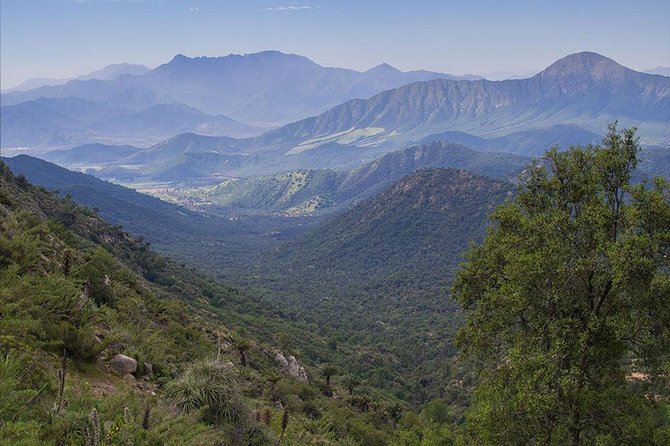
You should book Darwin’s Route if you want a private, demanding hike with real ecological variety and dependable transport. The Chilean palm forest is the star, but the rare Santiago oak woodland and the quiet cross-park route make the day more than a single scenic stop.
I especially like the combination of a rare natural setting, a guide such as Nicolas, and a practical setup that includes the park fee, lunch, poles, binoculars, and hotel transport. I would book it for an active trip to Santiago, pack extra water, and leave room in the schedule for traffic on the way home.
Skip it if you want an easy outing, guaranteed wildlife, or a short transfer. For fit hikers who want to trade the city for a full day in the Coastal Mountain Range, this is a personal and rewarding way to see a less familiar side of Chile.
FAQ
Where does the tour begin?
The hike begins in the northern Ocoa sector of La Campana National Park.
Where does the hike finish?
The route descends through the southern Cajon Grande sector toward Olmué, where the driver meets the group for the return to Santiago.
What time does pickup begin?
Pickup begins at 7:30 am from any hotel in Santiago.
How long does the experience last?
The full experience lasts approximately 10 hours. Transfer times are approximate and depend on traffic and the time of day.
Is lunch included?
Yes. A box lunch is included for each person. You should provide any dietary requirements when booking.
Is this suitable for children?
The minimum age is 13. Participants should have a moderate level of physical fitness.
What happens if the weather is poor?
The experience requires good weather. If poor weather causes cancellation, you will be offered another date or a full refund.
Just added around Santiago
- Walking City Tour with Funicular, Cable Car and Tasting★ 4.3 · 6 reviews
- Tour VIÑA CONCHA Y TORO + CASA MARQUES – Chile, from Santiago.★ 5.0 · 2 reviews
- VIÑA DEL MAR AND VALPARAISO TOUR★ 4.8 · 20 reviews
- Undurraga Wine tour★ 4.2 · 15 reviews
- Undurraga + Isla Negra + San Afonso del Mar —– Full day★ 4.1 · 8 reviews
- wetravelneruda’s route – Pablo Neruda’s route – Private tour★ 5.0 · 6 reviews
- Southcoast – Private Full-Day tour★ 5.0 · 6 reviews
- Santiago Private walking tour with Lunch★ 5.0 · 5 reviews
Santiago Tours, compared.
Valparaiso Port and Viña del Mar with Casablanca Wine Tasting
Read our review →
Cajon del Maipo/Embalse del Yeso Tour with Picnic
Read our review →
Vina Del Mar, Valparaiso, Casablanca & Reñaca Tour
Read our review →
Cable Car, Funicular and Sightseeing Bus in Santiago one day
Read our review →
Small-Group Cajón del Maipo Full-Day Tour and Picnic
Read our review →
Tour to Valparaíso, Viña del Mar, Pablo Neruda Museum and Vineyard
Read our review →
Maipo Valley Wine Tour with 4 vineyards from Santiago.
Read our review →